Do Industrial Robots Really Reduce Long-Term Costs? A Factory Perspective
Introduction
Moving Beyond Short-Term Savings to Understand Long-Term Cost Value.
When manufacturers consider adopting industrial robots, discussions often focus on direct metrics such as labor cost reduction or payback period. However, from a long-term factory operation perspective, this view is incomplete.
The true cost value of industrial robots often lies not in immediate savings, but in their ability to delay or prevent hidden costs—including rework, unplanned downtime, and quality fluctuations.
This article examines real factory scenarios to explain how industrial robots influence long-term cost structures and whether they truly reduce costs over time.
1. Understanding Hidden Costs in Factory Long-Term Cost Analysis
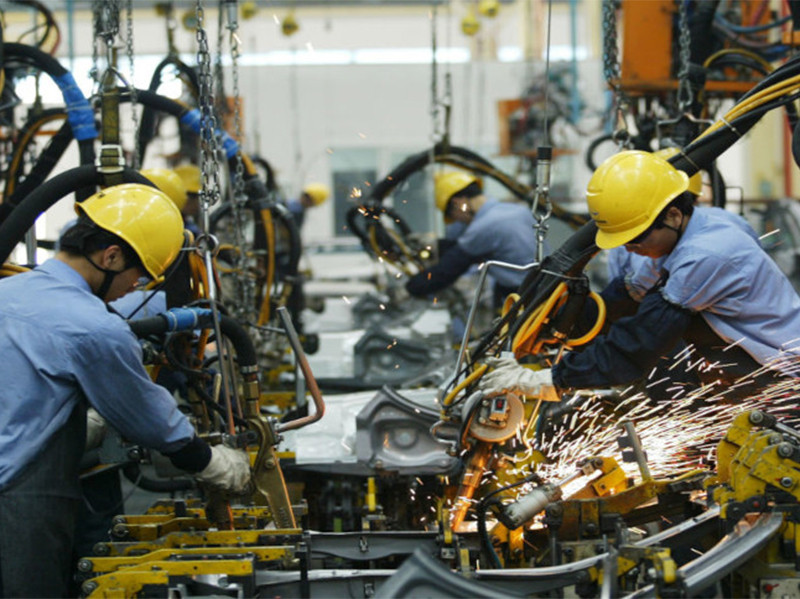
For factories, long-term cost pressure extends beyond visible expenses like labor and raw materials. The greater challenge often lies in hidden costs, including:
Quality fluctuation costs caused by human fatigue, skill variance, and inconsistency;
Downtime losses resulting from operator errors, staff turnover, or unexpected production stops;
Secondary costs, such as additional quality inspectors, buffer labor, and excess inventory used to offset instability.
These hidden costs are difficult to quantify yet have a significant cumulative impact on long-term operations.
2. How Industrial Robots Reduce Rework and Long-Term Quality Costs
The first major cost advantage of industrial robots is their ability to reduce quality variability at the source:
Standardized operations reduce rework rates
Robots follow predefined parameters consistently, eliminating variations caused by fatigue or skill differences. In processes like welding or precision assembly, rework rates can drop from 5–8% to below 1%.
Lower downstream quality losses
Stable quality reduces returns, claims, and customer complaints, while also lowering the need for additional inspection staff.
Predictable quality cost trends
Robot-driven production creates more stable and forecastable quality costs compared to manual operations.
3. How Industrial Robots Reduce Downtime Risk and Stabilize Production Costs
Production continuity is essential for long-term cost control. Industrial robots help stabilize output by reducing unplanned downtime:
Lower risk of unexpected stoppages
Robots operate continuously and use condition monitoring to detect issues early, reducing unplanned downtime by over 30% in many cases.
Avoid cascading downtime losses
Stable output improves delivery reliability and reduces penalties, customer loss, and excess inventory held as risk buffers.
Delay capacity expansion investments
Improved utilization of existing lines allows factories to postpone capital-intensive expansion projects.
Conclusion: Industrial Robots Reduce Cost by Reducing Uncertainty
From a factory perspective, the real cost value of industrial robots lies not in immediate savings, but in reducing uncertainty-related losses.
By stabilizing quality and output while delaying risk-driven investments, robots enable more predictable and controllable long-term cost structures.
If your factory is evaluating whether industrial robots make sense for long-term operation, it may be helpful to look beyond payback period and focus on quality variation, downtime risk, and process stability.
In projects supported by RBTC, these long-term considerations often prove more relevant than isolated cost metrics.
FAQ
Can Industrial Robots Truly Reduce Long-Term Factory Costs?
Yes—when evaluated from a long-term operational perspective. Industrial robots primarily reduce hidden costs such as rework, downtime, and quality variability over time.
Why Is Focusing Only On Payback Period Misleading?
Payback period calculations often exclude quality risks, downtime losses, and inventory costs, underestimating the long-term value of robots.
How Do Industrial Robots Reduce Hidden Costs?
By standardizing operations, minimizing downtime, and improving production predictability, which reduces excess labor and inventory.
Are Industrial Robots Suitable For Small And Medium-Sized Factories?
Yes—SMEs should start with high-impact processes and adopt robots in phases to validate long-term cost improvements.