Cost-effective Robot Automation Solution Integrator

Welding Robot Automation Solution

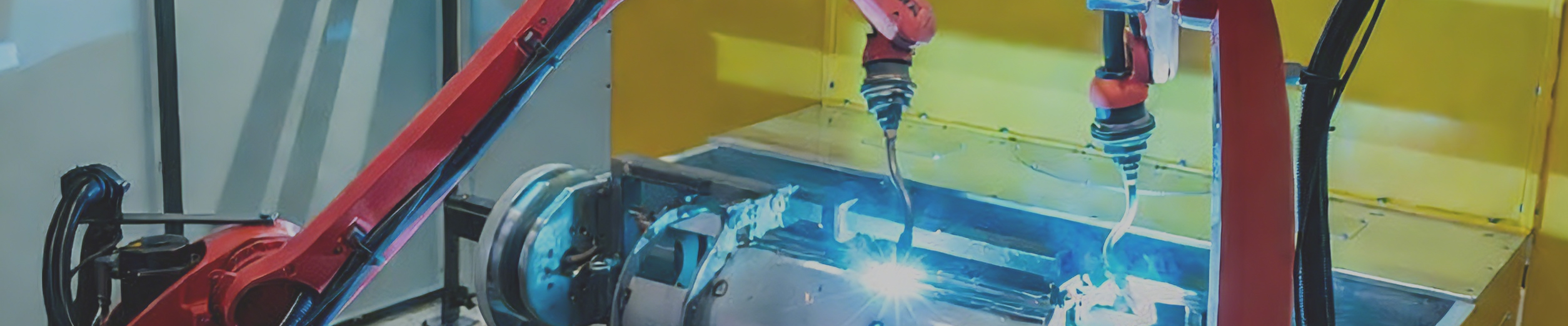
Industrial Robot Welding Automation for Stable and Scalable Manufacturing

Introduction

    Manual welding often struggles to maintain consistent weld quality, stable cycle times, and workforce availability—especially in high-volume or precision-driven manufacturing environments.
    As production scales and quality requirements increase, these variations gradually turn into long-term operational risks.

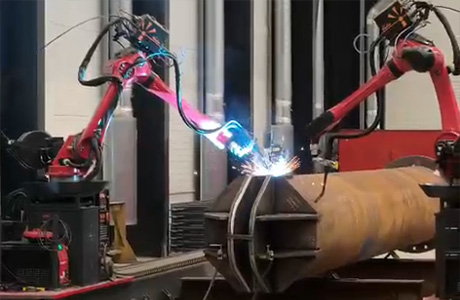
    RBTC provides industrial robot welding automation solutions, combining industrial robots with application-oriented system integration. Our solutions are designed to help manufacturers achieve stable weld quality, predictable production output, and long-term operational consistency, rather than short-term efficiency gains.

    RBTC works as an application-focused industrial robot and automation solution provider, supporting robotic welding projects from system design to on-site commissioning under real factory conditions.

Easy Operation

Easy use of robots

Equipped with graphical programming and drag-and-drop teaching.

Human-Robot Collaboration

Safe and reliable

Featuring point recording, welder assistance, and weld visual positioning. 

Flexible Deployment

Simple and fast

Customized ground rails can be added for easy movement, supporting quick switching between multi-station and multi-position welding scenarios.

What Production Challenges Can Robotic Welding Automation Solve?

Industrial robot welding automation is widely adopted to address long-term production challenges such as:

— Inconsistent weld quality caused by manual variability across shifts.
— Skilled welder shortages and rising labor costs.
— Low productivity in repetitive or high-duty welding operations.
— Safety risks in high-temperature, fume-intensive, or hazardous environments.
— Difficulty maintaining uniform cycle times in batch or continuous production.

By implementing a robotic welding automation solution, manufacturers can reduce quality fluctuation, stabilize production rhythm, and improve workplace safety—key factors for sustainable manufacturing.
Robotic solutions

Industrial Robot Welding in Manufacturing

Processes

Welding Processes:

Typical Robotic Welding Processes Supported

RBTC robotic welding automation solutions support a wide range of industrial welding processes, including:

MIG / MAG Robotic Welding

Suitable for structural steel, automotive components, and general metal fabrication.

TIG Robotic Welding

Applied in precision welding scenarios requiring clean seams and controlled heat input.

Robotic Spot Welding

Commonly used in automotive body assembly and sheet metal processing


Each robotic welding system is configured based on actual production conditions such as material type, joint geometry, required weld quality, and production takt time.
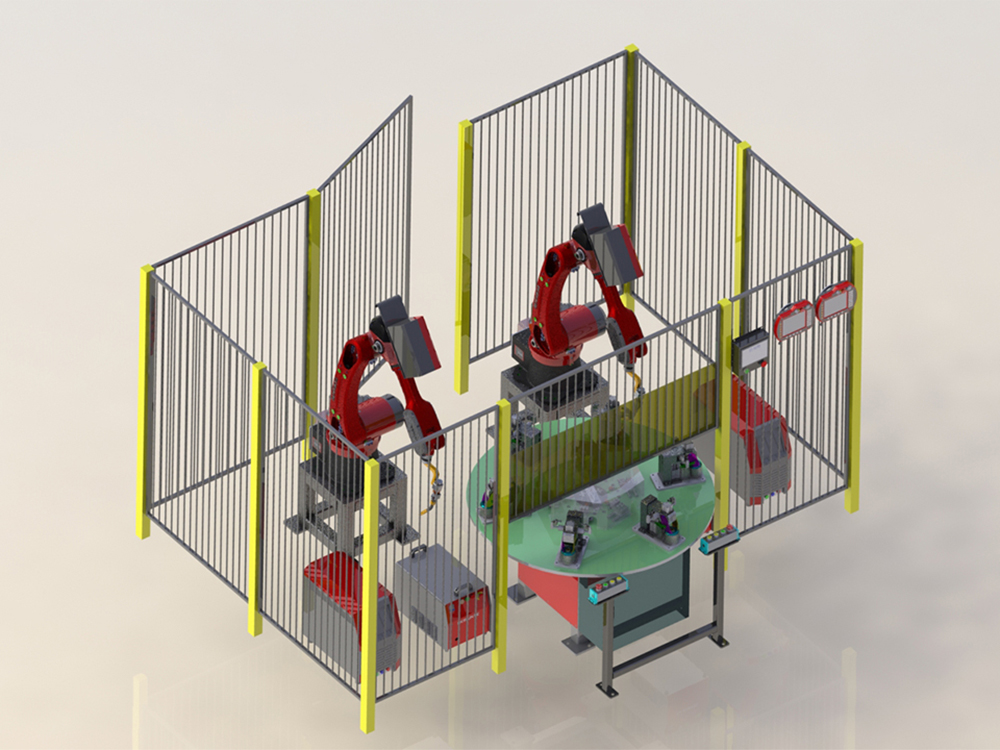
Components

Welding System Components:

Key Components of an Industrial Robotic Welding System

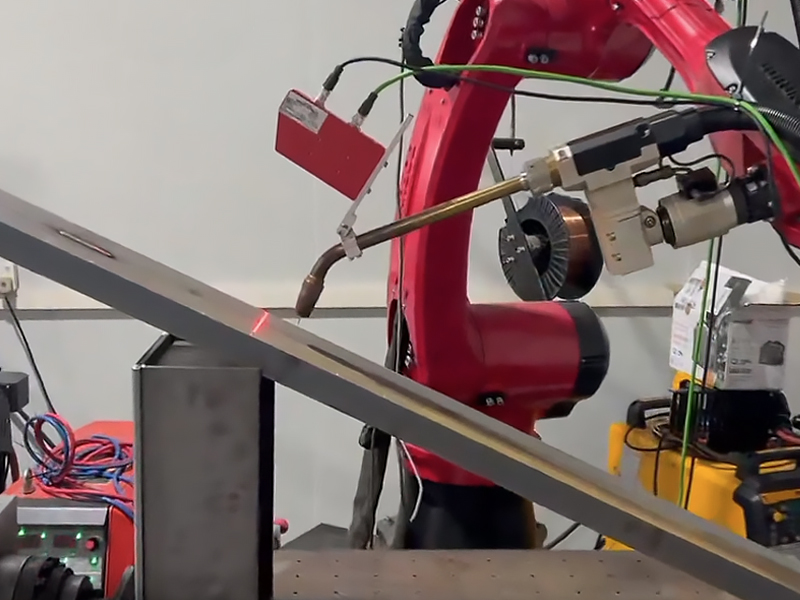
A typical industrial robotic welding automation system includes:

Industrial Welding Robot

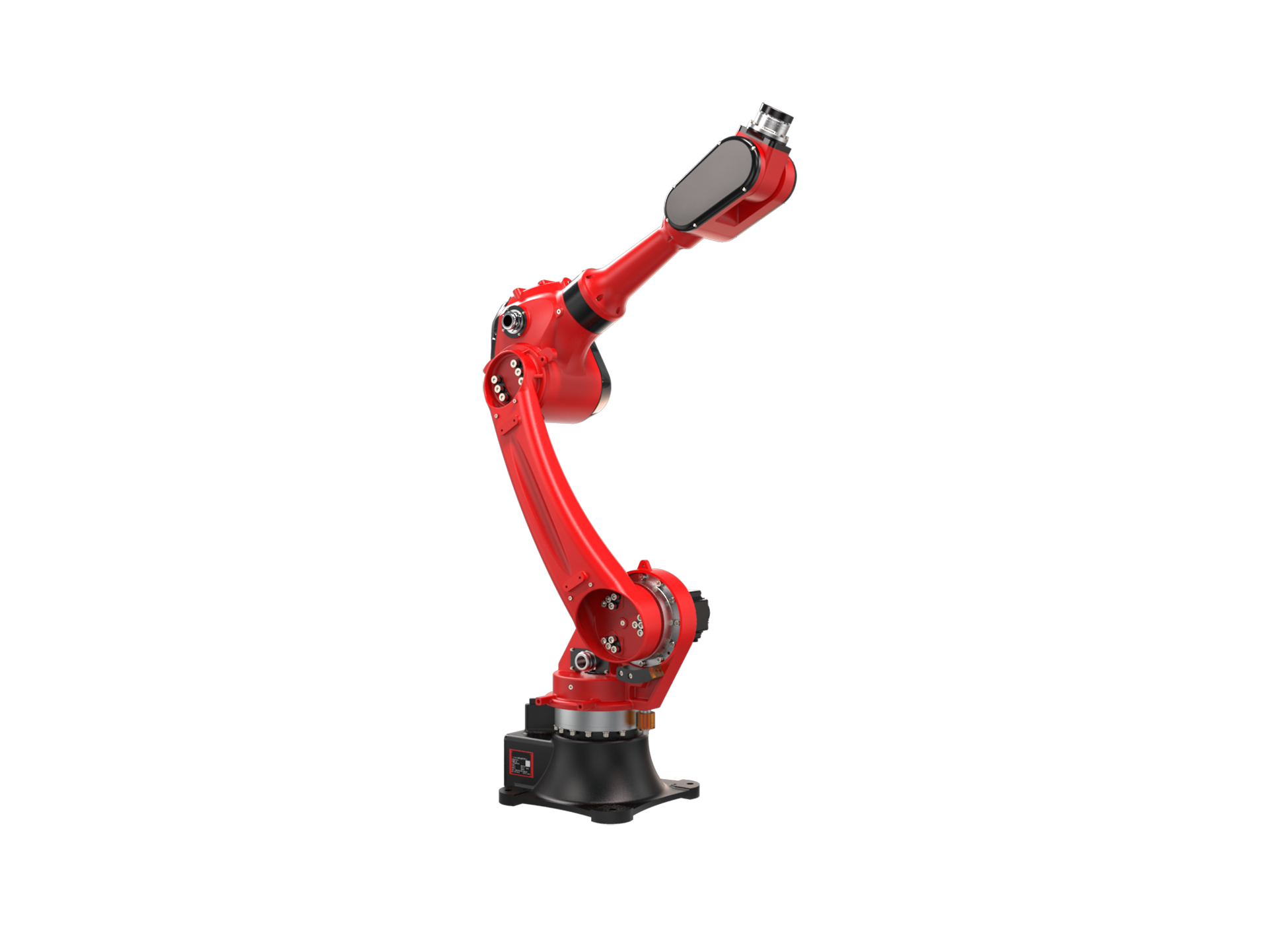
Six-axis industrial robots provide flexible motion paths and stable repeatability for complex welding trajectories.

Welding Power Source

Selected according to welding process requirements to ensure arc stability and consistent penetration.

Welding Torch and Wire Feeding System

Configured based on material thickness, joint type, and production speed.

Positioners and Fixtures

Improve workpiece accessibility and ensure consistent welding accuracy.

Safety and Control Systems

Including safety fencing, interlocks, and centralized control interfaces.


RBTC focuses on system-level integration, ensuring all components operate reliably as a complete robotic welding cell.
Solutions

RBTC Solutions

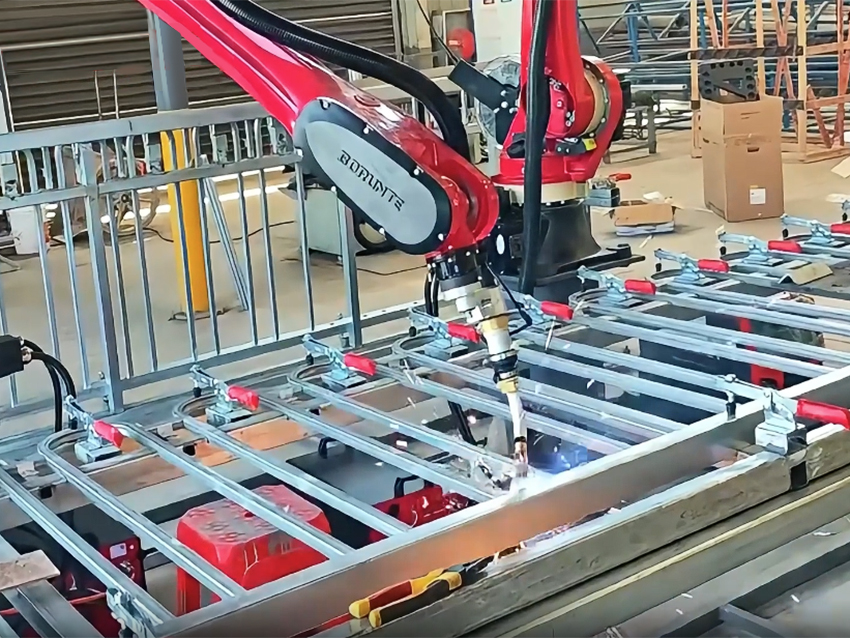
Application-Oriented Customization Based on Real Factory Conditions

Every welding application is different. RBTC provides application-oriented customization instead of one-size-fits-all systems, including:

Optimizing motion trajectories for complex weld joint geometries to ensure consistent weld bead formation.

Supporting seam tracking or vision systems.

Offering custom positioners, rotary tables, fixtures, and other tooling.

Integrating with existing conveyor lines or CNC equipment.

Adapting to high‑temperature, dusty, or continuous‑operation environments.

Providing international on‑site installation and commissioning services


This approach ensures the robotic welding system fits actual production needs without unnecessary complexity.
Product Recommendation

Six-Axis Industrial Welding Robot
BRTIRWD1506A Six-Axis Industrial Welding Robot
  • Loading Ability:  6kg
  • Arm Length:  1600mm
  • Repeated Positioning accuracy:  ±0.05mm

BRTIRUS1510A Six-Axis Industrial Robot
  • Loading Ability:  10kg
  • Arm Length:  1500mm
  • Repeated Positioning accuracy:  ±0.05mm

BRTIRUS1820A Six-Axis Industrial Robot
  • Loading Ability:  20kg
  • Arm Length:  1850mm
  • Repeated Positioning accuracy:  ±0.05mm

FAQ

Industrial Robot Welding FAQ

We hope to help users achieve robotic welding automation to improve production efficiency.

Which industries commonly use welding robots?

Welding robots are widely used in industries that require high consistency, repeatability, and stable welding quality. 
Common industries include automotive manufacturing, metal fabrication, construction equipment, machinery manufacturing, and appliance production.

Why Industrial Robot Welding Automation for Long-Term Production?

Compared with manual welding, industrial robot welding automation offers:


Stable and repeatable weld quality.
Predictable cycle times and production output.
Reduced dependency on skilled labor.
Improved safety in hazardous environments.
Long-term operational and cost stability for high-volume manufacturing.


When properly selected and integrated, robotic welding automation becomes a long-term production asset rather than a short-term upgrade.

How to Evaluate if Welding Automation Is Right for Your Factory?

Selecting a robotic welding automation solution depends on factors such as welding process, workpiece characteristics, production volume, and factory layout.
For manufacturers evaluating robotic welding for long-term production, discussing these factors with experienced automation teams can help clarify feasibility and implementation paths.

Start Your Robotic Project Today

Tell us your application. RBTC industrial Robotic Automation: Cut Costs, Boost Efficiency, Maximize ROI! Custom Solutions for Your Production Line.
Full Line Industrial Robot

Cost-Effective Robot Solutions Manufacturer China——Send Now

Please tell us your robot automation requirements. From scheme design to implementation, our professional team is always on standby to provide you with precise and efficient service support!
*Email
*Name
*Mobile Phone
*Title
*Content
Upload
  • Only supports .rar/.zip/.jpg/.png/.gif/.doc/.xls/.pdf, maximum 20MB.
Contact Person
Tommy
Name:
Tommy
Tel:

+86-13826981851

Email:
WhatsApp:
8613826981851
Address:
Room 102, No. 30, Hengfeng 2nd Road, Daguo, Changping Town, Dongguan City, Guangdong Province