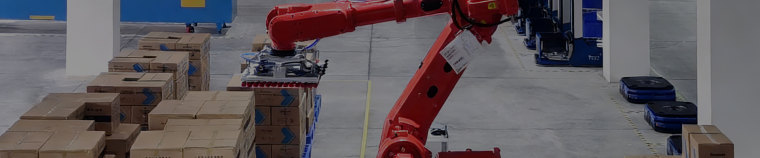
Smarter palletizing. Less manual handling. Built for your production line.
Improve end-of-line efficiency with RBTC palletizing cobots. Our collaborative robotic palletizing workstations automate repetitive carton and case stacking, helping manufacturers reduce manual lifting, keep pallet patterns consistent and release operators for higher-value work.
Whether you need a standard cobot palletizer or a customized robotic palletizing system, RBTC supports the whole project: robot selection, workstation engineering, custom end-of-arm tooling, conveyor integration and commissioning assistance.
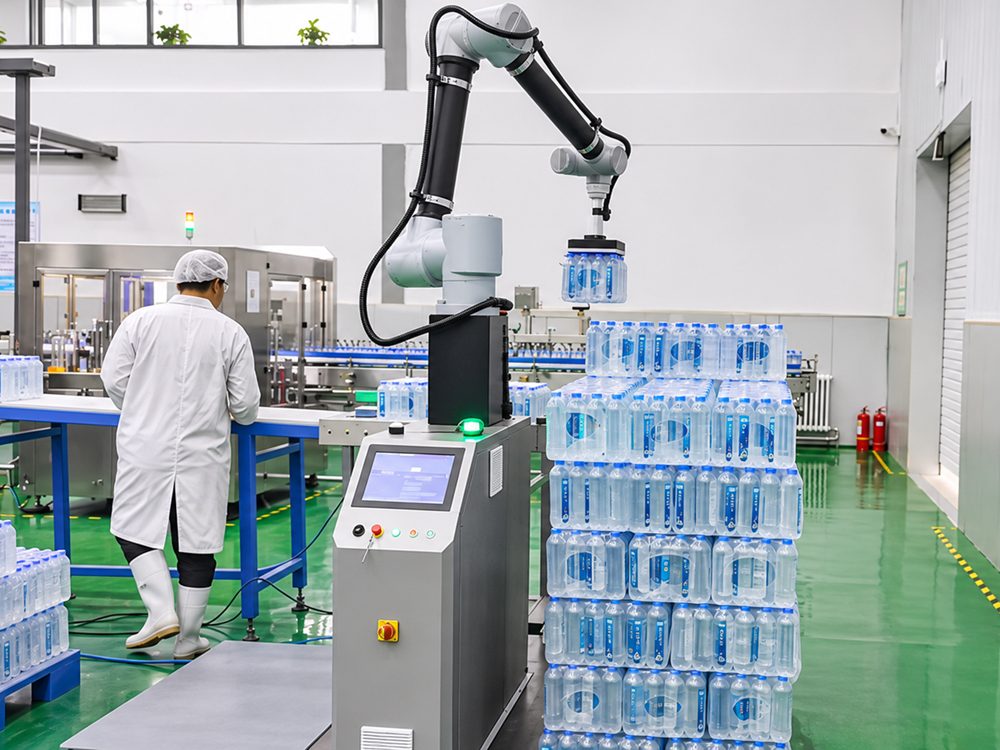
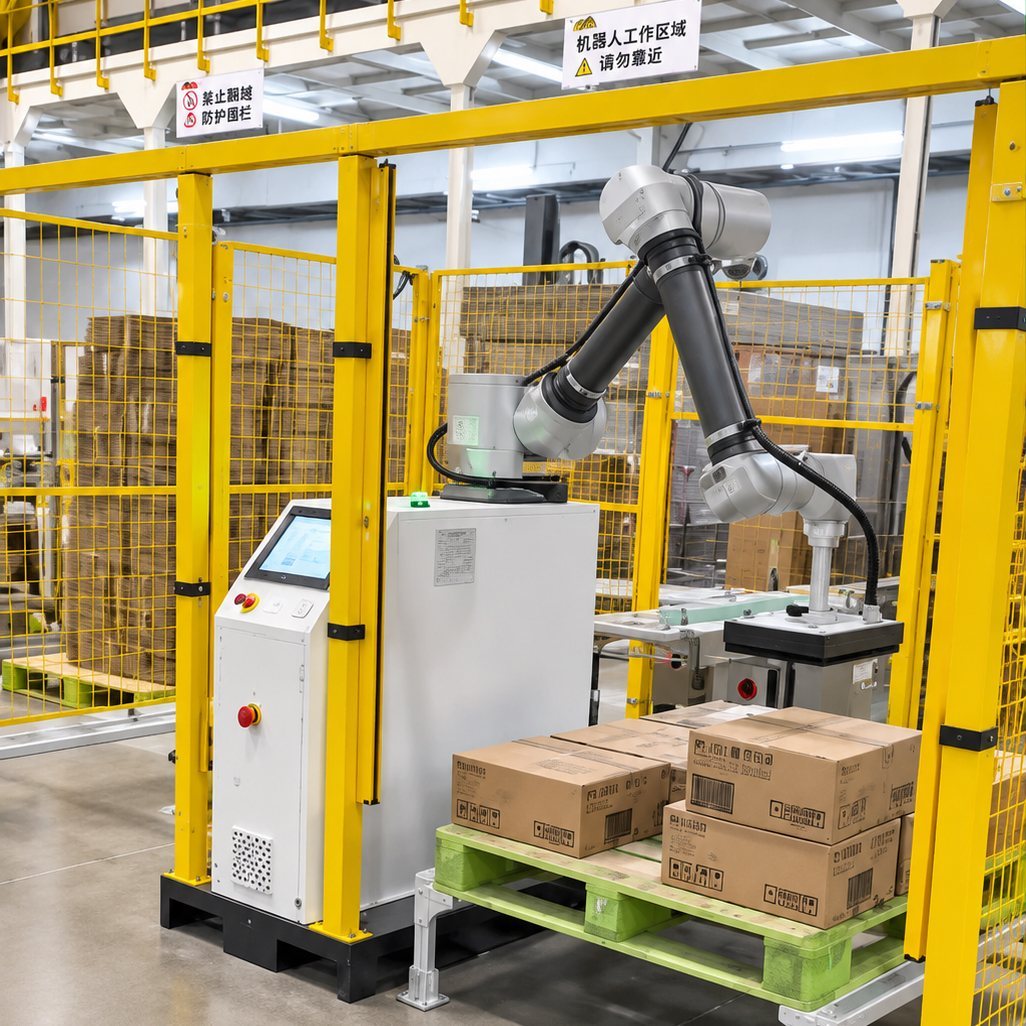
Palletizing cobot workstation stacking bottled water cases on a beverage packaging line
10+Years of robotics experience
12,000 m²Factory & assembly area
40+Countries supplied
12 monthsStandard robot warranty
Explore Our Palletizing Cobot Range
Different products, packaging formats and line speeds need different palletizing configurations. Start with the standard 30 kg workstation below, then review how RBTC adapts the same platform for compact cells and multi-line systems.
30 kg payload
BRTMD163001A Palletizing Cobot
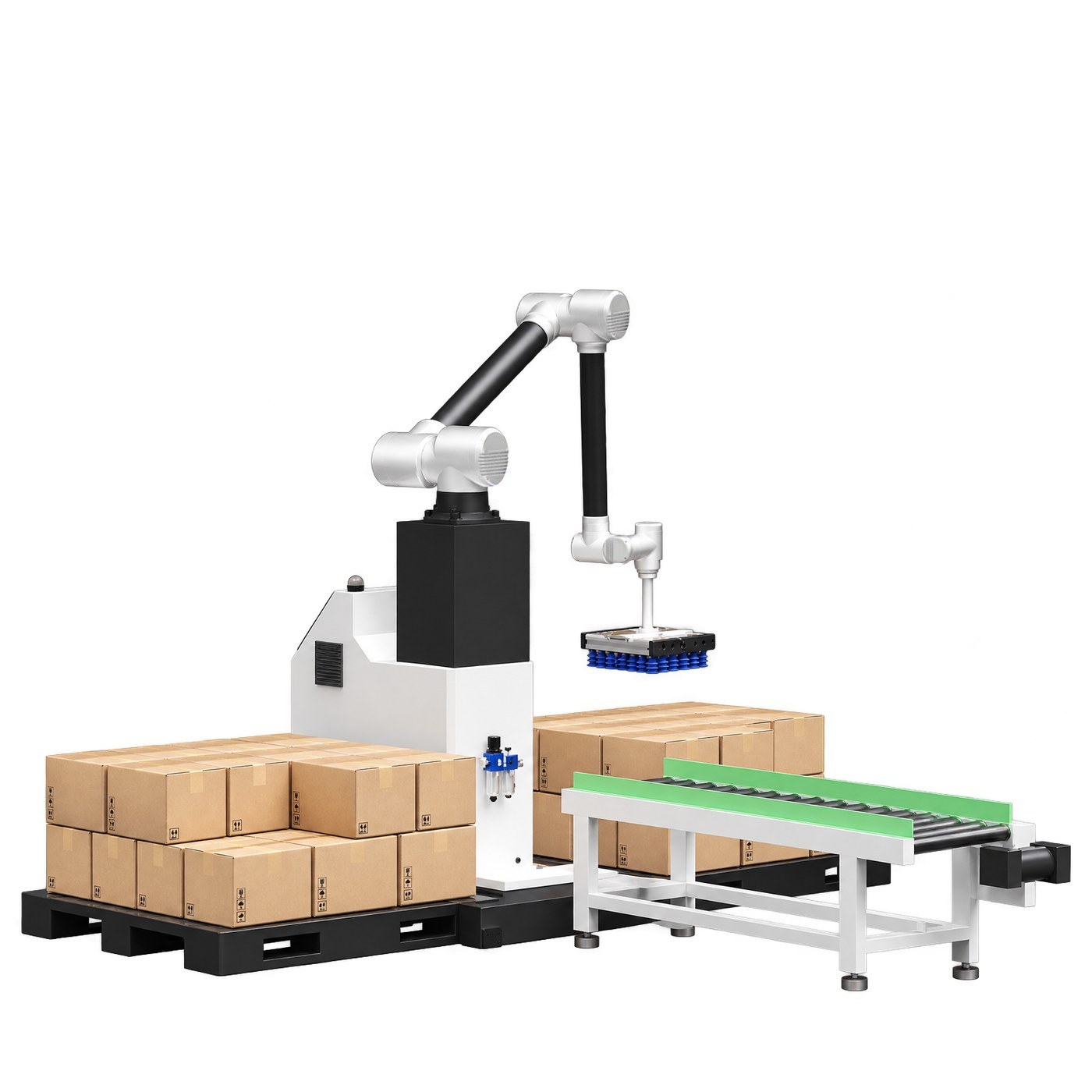
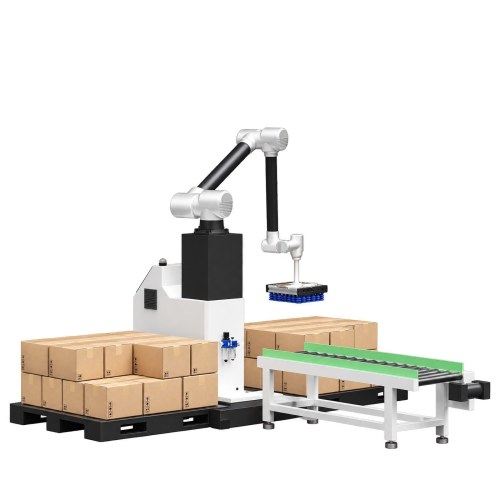
An integrated collaborative palletizing workstation for repetitive carton and case stacking, with a 1,900 mm working radius, up to 2,100 mm stacking height and code-free graphical programming.
30 kg rated robot payload
1,900 mm working radius, max. 2,100 mm stacking height
No-code graphical programming and configurable pallet patterns
A single-cell configuration for factories where floor space and ease of operation matter. The workstation is laid out around your conveyor height, pallet positions and access requirements.
Compact footprint of 1,505 × 1,716 mm on the standard model
Suitable for existing packaging lines with tight space
When one station has to serve several production lines or multiple pallet positions, RBTC engineers the robot, gripper, conveyor interfaces and safety concept as a single coordinated system.
Multi-line feeding and multiple pallet positions
Custom grippers for cartons, cases, bags and trays
Safety guarding, scanners or light curtains per risk assessment
Specifications of the palletizing cobot workstation currently available in this product group. Payload ratings refer to the robot, not to the maximum package weight — the gripper, product characteristics and operating conditions all affect real handling capability.
Palletizing Cobot Features for Consistent End-of-Line Output
Robotic palletizing does more than replace repetitive manual stacking. A properly configured workstation makes the end of your line more predictable and easier to manage.
Labour
Less Repetitive Manual Lifting
Automate physically demanding lifting and stacking so operators can manage inspection, packing and line supervision instead of continuous pallet building.
Consistency
Repeatable Pallet Patterns
Programmed movements and stacking patterns keep product placement repeatable, supporting stable pallets and predictable downstream handling.
Programming
Code-Free Graphical Programming
Operators can configure palletizing routes and adjust working parameters through a graphical interface, without conventional robot programming.
Footprint
Compact Workstation Design
The integrated workstation keeps the robot, controller and pallet positions in one compact unit, which helps where production space is limited.
Flexibility
Supports Product Changeovers
With suitable tooling and programming, one palletizing cobot can handle different carton sizes, stacking patterns and product changeovers.
Integration
Connects to Existing Packaging Equipment
Palletizing cobots can be integrated with compatible conveyors, packaging machines and control equipment to support one coordinated end-of-line process.
Palletizing Cobot Applications Across Packaging Industries
RBTC helps manufacturers evaluate automated palletizing based on product dimensions, packaging characteristics, required throughput and factory conditions. The photos below show palletizing cobot stations running in food, beverage, chemical and consumer goods plants.
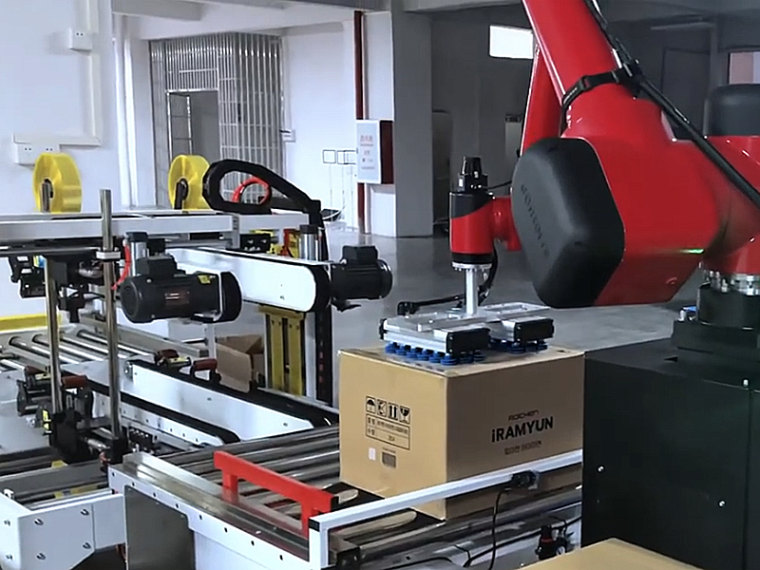
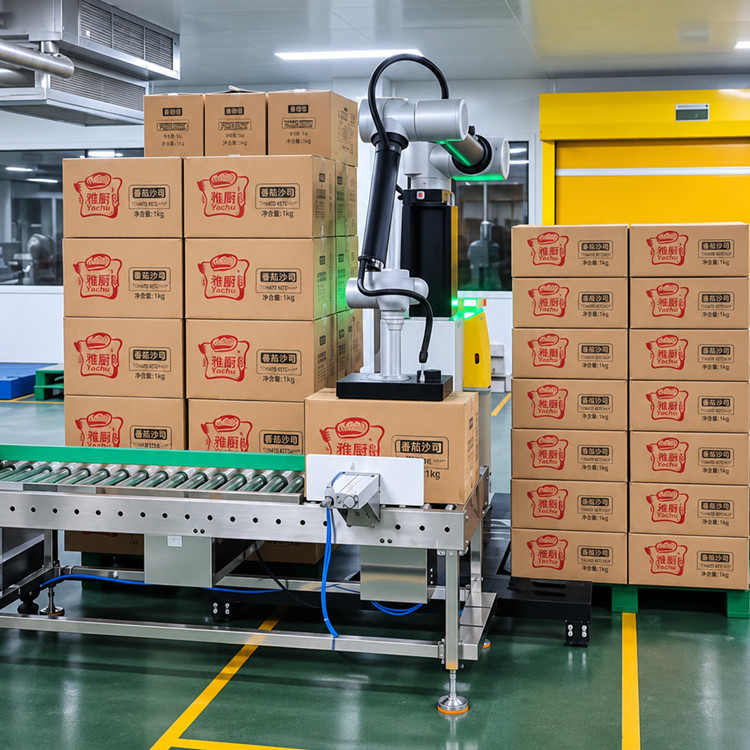
Food packaging line: a palletizing cobot builds ketchup carton pallets from a roller conveyor infeed
01
Carton & Case Palletizing
Transfer and stack corrugated cartons, shipping boxes and packaged cases from production conveyors onto pallets with repeatable pallet patterns.
02
Food & Beverage Packaging
End-of-line handling of packaged food products, beverage cases, bottled-product cartons and boxed consumer food.
03
Consumer Goods & Daily Chemicals
Robotic handling for detergent cartons, personal-care boxes, household goods packaging and cosmetic cartons.
04
Packaging & Distribution
Consistent carton palletizing for contract packing, multi-SKU packaged goods and distribution preparation.
05
Other Industrial Packaging
For specialized products, RBTC evaluates customized grippers and robot configurations. Not every product suits a collaborative robot — heavy-duty or high-speed work may need an industrial palletizing robot.
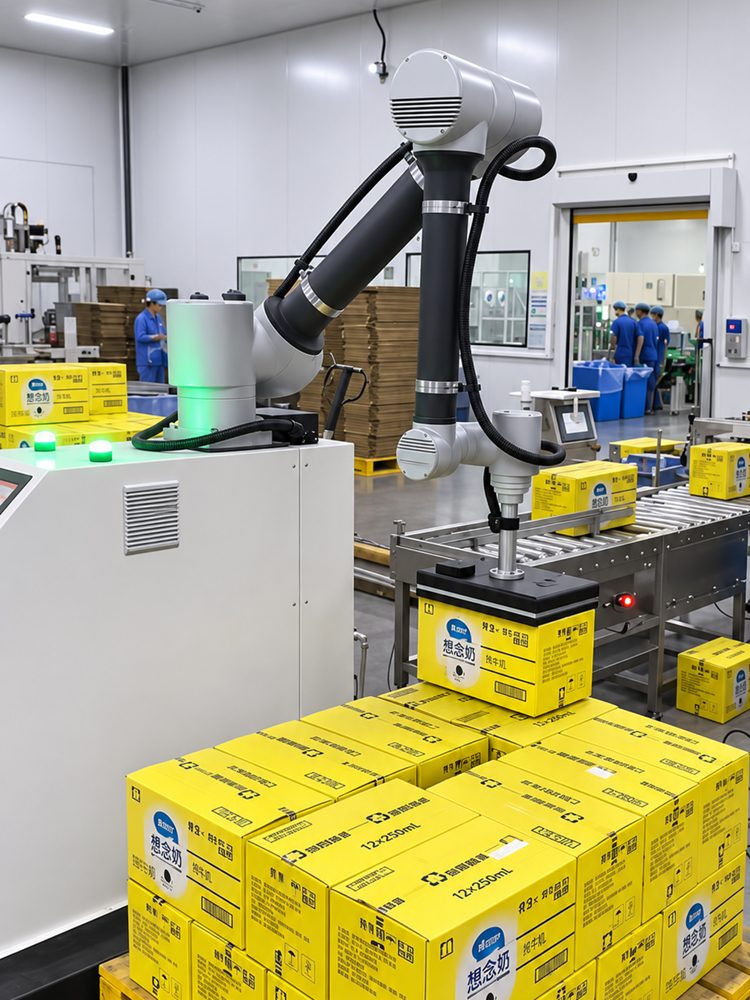
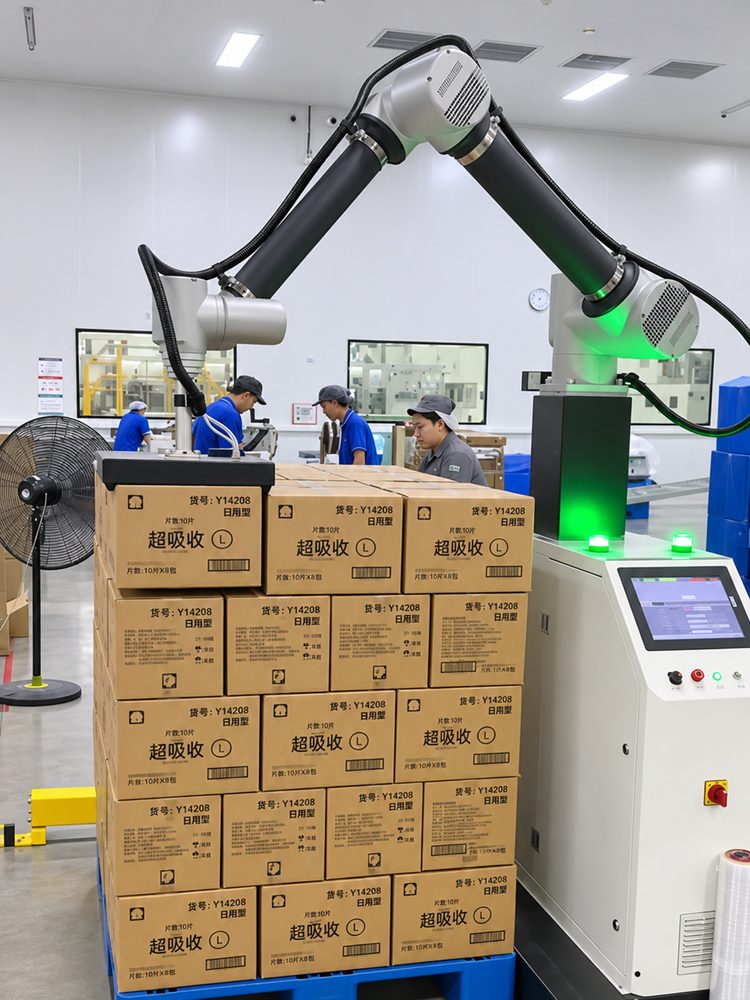
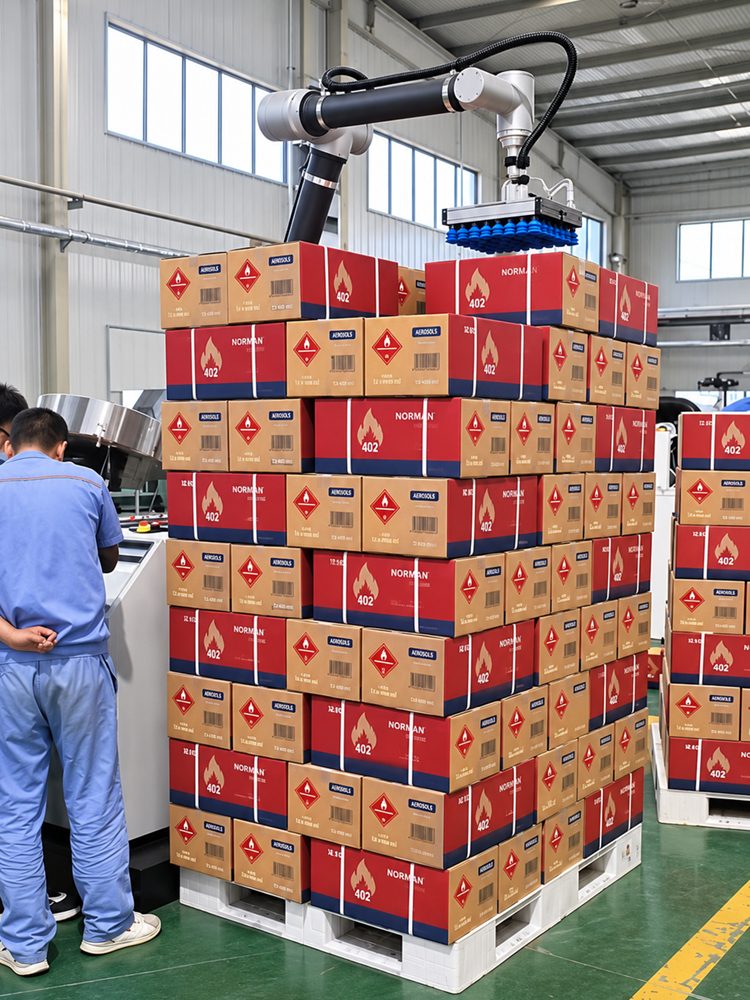
Dairy carton palletizing on a conveyor-fed lineHygiene product carton palletizing at high stack heightChemical carton palletizing with vacuum tooling
This 30 kg palletizing cobot stacks cartons onto 1400 × 1400 mm pallets at up to 9 pcs/min with no-code programming. Send your carton size for a quote.
How to Choose the Right Palletizing Cobot for Your Line
Choosing a palletizing cobot is not only a question of payload. These are the points our engineering team reviews before recommending a configuration.
Selection Factor
What to Consider
Product weight and size
Carton or case dimensions, maximum package weight and weight of the gripper
Line speed
Required boxes per minute or cases per hour, including peak production periods
Pallet specification
Pallet dimensions, stacking height and number of pallet positions
Working range
Distance from conveyor pickup point to the furthest pallet corner
Available space
Floor area, room height and access for operators and maintenance
Product variation
Number of carton sizes and how often the line changes over
Gripping method
Vacuum, mechanical or hybrid tooling based on surface and packaging type
Integration
Conveyor interfaces, sensors, control signals and safety requirements
Not Sure Which Palletizing Cobot Fits Your Products?
Send your product photos, carton dimensions, weight and target line speed. Our engineers will review the application and suggest a workable workstation configuration before you commit to a purchase.
Most palletizing projects run into the same practical problems: labour pressure, limited floor space, changing carton sizes and equipment that has to work with what is already installed. Here is how we address each one.
Challenge 01
High Labour Demand and Repetitive Lifting
Manual palletizing needs continuous physical effort and becomes difficult to plan when staffing is limited or turnover is high.
How RBTC helps: we size the palletizing cobot around package weight, stacking requirements, throughput and shift patterns to reduce repetitive handling while keeping realistic cycle times.
Challenge 02
Limited Space for New Equipment
Many factories need to add automation without rebuilding the existing production layout.
How RBTC helps: our engineers assess robot reach, pallet positions, conveyor arrangement, safety zones and installation space to find a practical compact configuration.
Challenge 03
Different Carton Sizes and Changing Products
Frequent packaging changes add setup work and complicate stacking patterns from one production run to the next.
How RBTC helps: we evaluate gripper design, programmable pallet patterns and handling sequences so one palletizing cobot can cover the required packaging variations.
Challenge 04
Integration with Existing Equipment
A palletizer must work with conveyors, sensors, packaging machines and line controls rather than run as an isolated machine.
How RBTC helps: we review equipment interfaces, material flow, signal requirements and robot operating sequences, then propose a suitable integration scope.
Challenge 05
Uncertainty Around Automation Investment
Buying equipment without a clear understanding of production requirements can lead to unnecessary cost or a system that cannot keep up.
How RBTC helps: we provide application assessment and technical evaluation before quotation, so you can see the proposed configuration, project scope and key performance considerations first.
Next Step
Send Us Your Palletizing Requirement
Product photos, carton dimensions, weight, line speed and pallet size are usually enough for us to propose a workable palletizing cobot configuration.
A robot arm is only one part of an effective palletizing system. Results depend on how the robot, end-of-arm tooling, conveyors, controls and safety components work together.
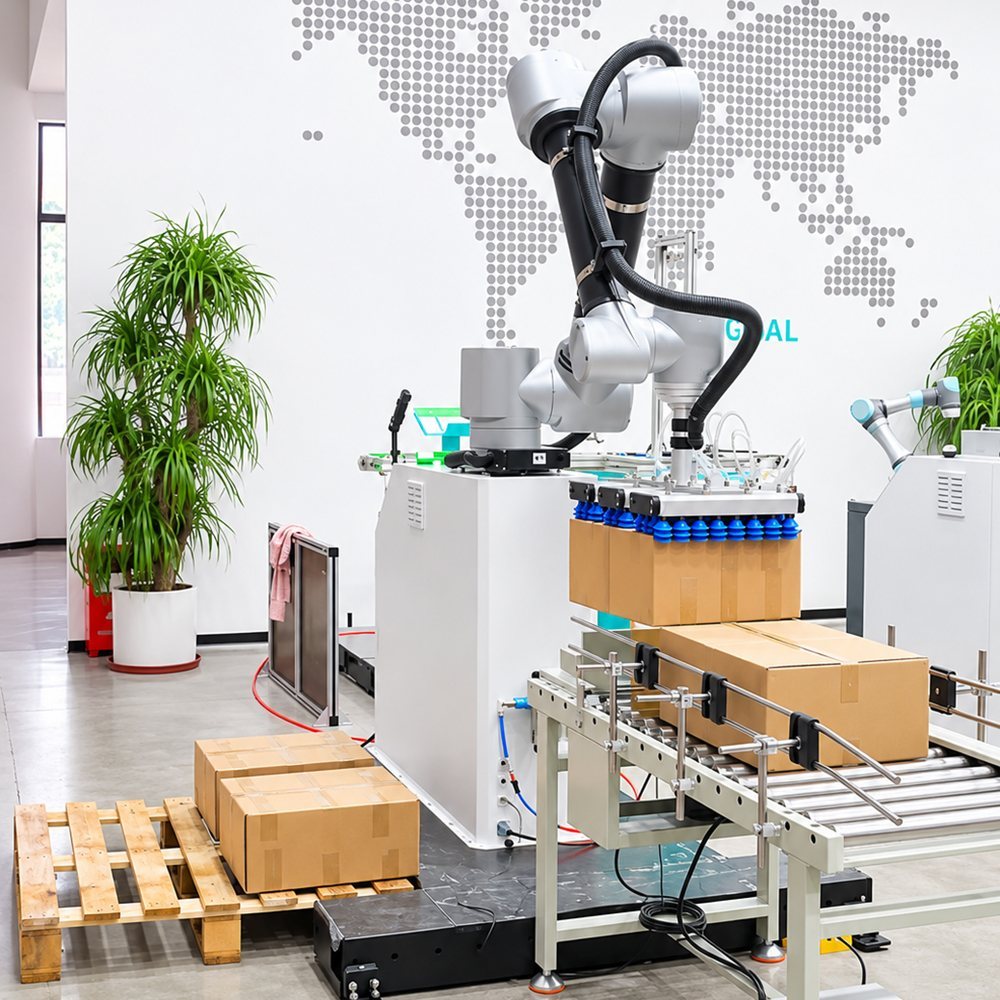
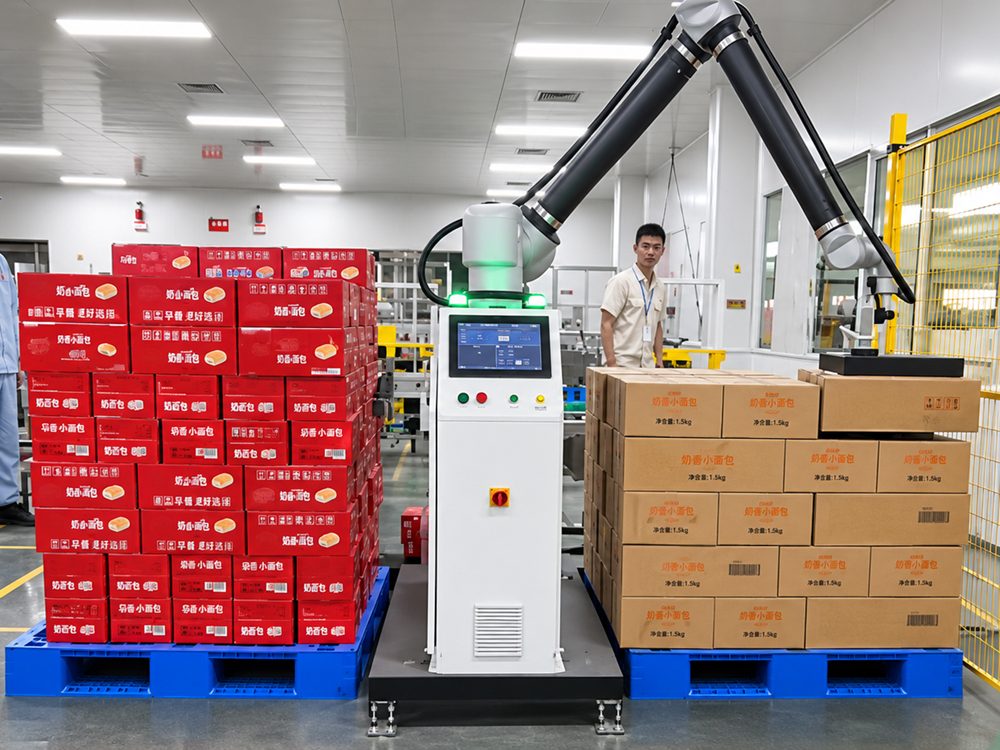
Custom palletizing cobot workstation with dual pallet positions, control cabinet and safety guarding
Robot Selection and Workstation Design
We select suitable robot configurations based on payload, working radius, palletizing height, required cycle time and factory layout, then design the workstation around your existing line.
Custom Grippers and End-of-Arm Tooling
Different products need different gripping methods. RBTC assists with the selection or customization of vacuum grippers, mechanical grippers and application-specific end effectors.
Pallet Patterns, Programming and Safety Configuration
Stacking patterns and operating sequences are configured to your pallet size and package dimensions. Depending on the risk assessment, a cell may include safety scanners, light curtains, protective guarding or additional controls.
From equipment selection to workstation customization, the goal is a palletizing solution that fits your production process. Review our automation engineering scope.
Palletizing Cobot Supply for B2B Buyers
Packaging manufacturers, equipment distributors, OEM customers and system integrators buy palletizing cobots for different reasons. Support is structured around the purchasing model you actually use.
Food, Beverage and Consumer Goods Plants
Automate carton and case stacking at the end of existing lines, with robot selection, tooling and integration support.
Equipment Distributors
Source palletizing cobots for resale or multi-unit projects, with clear model, quantity and delivery terms.
OEM and Machine Builders
Add a palletizing module to a packaging line package, with the technical scope reviewed before cooperation.
Automation Integrators
Source collaborative palletizing equipment and discuss custom tooling, programming and engineering support for larger systems.
Need Multiple Palletizing Cobots or a Custom Supply Proposal?
Send the required models, estimated quantities, destination market and technical specifications. We will respond with a quotation structure and delivery arrangement.
Palletizing Cobot Project Workflow: From Requirement to Delivery
A structured process keeps a palletizing project predictable, from the first requirement review to equipment delivery and technical support.
01
Application Assessment
We collect and review product data, packaging dimensions, weight, required throughput, pallet specification and existing line layout.
02
Solution Design and Equipment Selection
Our engineers evaluate the robot, gripper configuration, workstation layout, operating sequence and potential integration requirements.
03
Technical Review and Quotation
We review the proposed configuration with your team and prepare a quotation covering equipment, customization and service scope.
04
Assembly and Functional Testing
Depending on the project, RBTC coordinates robot configuration, customized tooling, equipment assembly, programming and agreed functional checks.
05
Delivery, Installation and Support
We coordinate delivery and provide technical documentation, installation guidance, remote support and commissioning assistance. On-site service can be arranged for applicable projects.
Why Choose RBTC as Your Palletizing Cobot Supplier
Palletizing equipment supply backed by manufacturing resources, application engineering and international delivery experience.
Manufacturing and Assembly in Dongguan, China
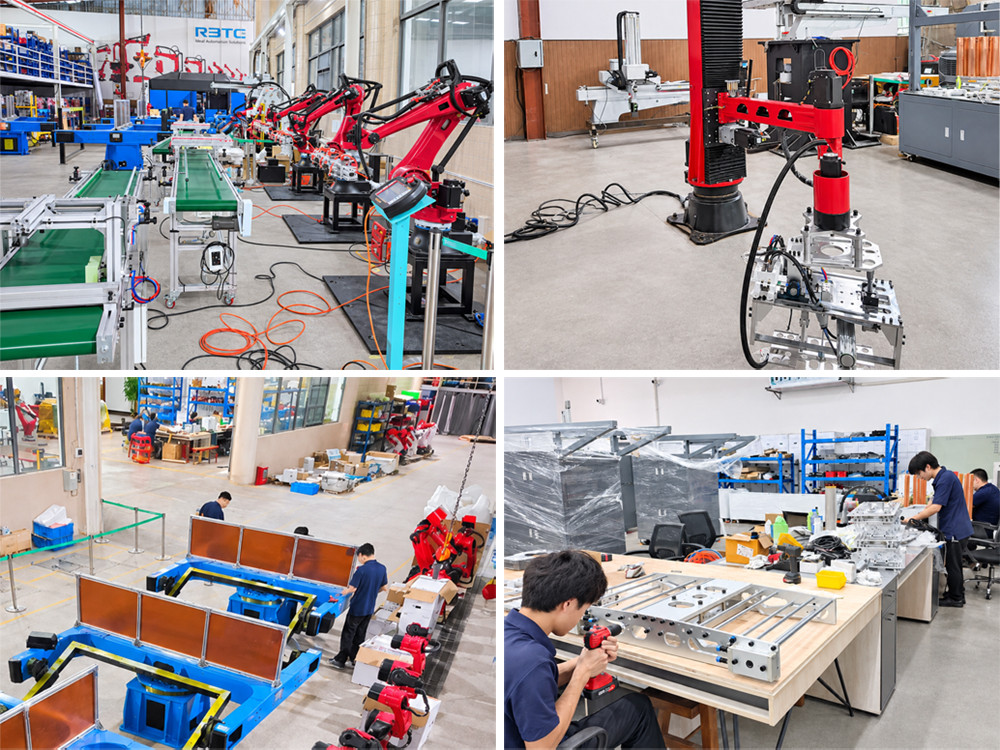
A 12,000 m² factory and assembly area supports robot configuration, equipment preparation, custom tooling and automation projects, so equipment and application engineering come from one supplier.
10+ Years of Robotics Experience
Application planning across multiple manufacturing processes, including palletizing, handling and packaging automation.
Equipment Supply Plus Custom Engineering
Grippers, non-standard auxiliary equipment, robot programming and integration available alongside standard workstations.
International Supply Experience
Robotic equipment supplied to customers in more than 40 countries and regions, including OEM and distribution buyers.
Technical Support After Purchase
Standard 12-month robot warranty, operating documentation, remote troubleshooting and commissioning assistance.
Common questions from buyers comparing palletizing cobots for carton and case handling.
What is a palletizing cobot?
A palletizing cobot is a collaborative robotic system used to pick up products and stack them onto pallets. The complete workstation typically includes a collaborative robot arm, end-of-arm gripper, controller, pallet positions and safety equipment, all planned as one end-of-line unit.
How do I choose the right palletizing cobot for my line?
The main factors are product weight, carton dimensions, required production speed, pallet size, stacking height, available floor space and integration requirements. Send these details and RBTC can review which configuration suits your line.
What products can palletizing cobots handle?
Depending on the robot and gripper configuration, suitable products include cartons, cases and other packaged goods. Product weight, dimensions, surface conditions and stacking requirements must be checked for each application.
What is the maximum payload of a palletizing cobot?
Payload ratings vary by model; the workstation in this group is rated at 30 kg robot payload. The maximum product weight is lower than the robot rating because the gripper weight and operating conditions must be deducted. Contact RBTC with your packaging details to confirm suitability.
How many boxes per minute can a palletizing cobot stack?
Actual speed depends on the robot, packaging dimensions, handling distance, gripper design, stacking pattern and pallet height. The published figure for this workstation is under 9 pieces per minute; RBTC can evaluate expected cycle time from your real product data.
Can RBTC customize a robotic palletizing system for my factory?
Yes. RBTC provides application assessment, robot selection, custom tooling, workstation design, programming, integration and commissioning support. The final configuration and service scope are agreed before the order is placed.
Can a palletizing cobot integrate with my existing packaging line?
Integration may be possible depending on your conveyor system, machine interfaces, available installation space and control requirements. RBTC can review the existing line configuration before proposing equipment.
Can one palletizing cobot handle different box sizes?
Depending on the gripper, robot reach, operating program and packaging characteristics, one workstation may support several box sizes or pallet patterns. The compatible range must be confirmed from your product list before ordering.
Does a palletizing cobot require safety fencing?
Collaborative robots do not automatically remove the need for guarding. The required protection depends on a risk assessment of the complete workstation, including the robot, gripper, payload, speed and layout. Safety scanners, light curtains or perimeter guarding may be recommended.
How much does a palletizing cobot system cost?
Price depends on robot model, payload, gripper design, workstation configuration, conveyor interfaces, safety equipment, programming and installation requirements. RBTC prepares application-specific quotations so the equipment and service scope are clear.
Does RBTC provide overseas installation and after-sales service?
RBTC supports international customers with technical documentation, remote assistance, installation guidance and commissioning support. On-site technical service can be arranged for applicable projects.
Request a Quote for Palletizing Cobots & Custom Palletizing Systems
Looking to automate manual palletizing, make carton stacking more consistent, or integrate a cobot palletizer into an existing factory? Share your requirements and our engineering team will help you evaluate the right system.
Tell Us About Your Project
Company name and destination country
Product type and packaging dimensions
Maximum package weight and gripper requirement
Required line speed (boxes/min or cases/hour)
Pallet dimensions and stacking height
Existing conveyor and production line arrangement
Available installation space and room height
Estimated quantity and expected schedule
Our team reviews your information and responds with a suitable palletizing cobot configuration, technical scope and quotation.