How Industrial Robots Improve Production Stability Beyond Efficiency
When manufacturers introduce industrial robots, the initial focus is often on improving efficiency and output. However, long-term operational experience shows that the value of production stability goes far beyond simple gains in speed.
Stable production operations directly determine three critical factors: consistency in product quality, reliability of delivery schedules, and controllability of cost management.
For factories pursuing sustainable development, the role industrial robots play in strengthening production stability is a key foundation for long-term profitability.
This article is based on RBTC’s long‑term operational experience with industrial robots across diverse manufacturing scenarios.
I. How do industrial robots improve production stability?
Human operators inevitably introduce uncontrollable variability. These factors are difficult to quantify, yet they can significantly disrupt production rhythm.
Industrial robots reduce such risks at the source through standardized movements and processes, mainly in three aspects:
Consistent production rhythm across shifts.
Robots are not affected by fatigue or emotional fluctuations, ensuring consistent output quality and efficiency across day and night shifts.
Stable and controllable product quality.
Robots strictly follow predefined parameters, minimizing quality variation caused by differences in operator experience or skill levels.
Predictable exception handling and reduced downtime.
Robots can quickly detect material shortages or equipment failures, trigger alarms, and stop operations, enabling faster troubleshooting and preventing escalation.
Over time, the benefits of this stability gradually surpass the value of initial efficiency improvements. It reduces rework and supplementary production caused by human errors and makes production planning easier to execute.
II. How do industrial robots enable sustainable operations?
Stable production is a prerequisite for long-term production line optimization.
Continuous and controllable robot operations provide accurate data support for factory planning and enable more informed operational decisions.
This stability enables three major optimization objectives:
Accurate capacity estimation.
With measurable and stable robot performance, factories can forecast future capacity based on historical data, avoiding overexpansion or undercapacity.
Predictable maintenance windows.
Robots continuously monitor their operating condition and provide early warnings of component wear, enabling preventive maintenance and reducing unplanned downtime.
Optimized inventory and logistics.
Stable output makes material demand more predictable, allowing factories to control inventory levels more precisely and reduce capital tie-up and material waste.
Together, these optimizations form the foundation of sustainable factory operations, enabling a shift from reactive problem-solving to proactive planning.
III. How do industrial robots reduce rework and waste?
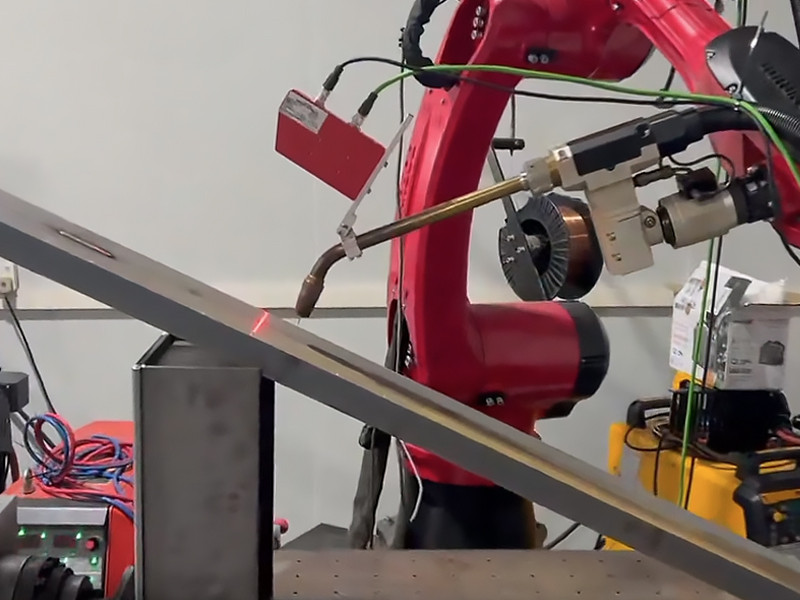
In critical processes such as welding, coating, and precision assembly, consistency in process parameters directly determines product quality and resource utilization.
Industrial robots maintain consistent process execution standards, delivering three core benefits:
Significantly reduced rework rates. In automotive component welding, robotic weld accuracy can be controlled within ±0.1 mm, reducing rework rates from 5–8% for manual welding to below 1%.
Reduced material waste. In coating processes, robots precisely control paint application, avoiding under-spraying or sagging, improving paint utilization by 15–20%.
Uniform finished product quality. Standardized operations ensure consistent quality across all products, strengthening brand reputation and market competitiveness.
Data shows that factories operating industrial robots for more than three years reduce quality-related cost losses by over 40% on average. Long-term process stability becomes a key driver of profitability growth.
IV. How can industrial robot production be continuously improved to support green manufacturing?
When integrated with Manufacturing Execution Systems (MES), industrial robots provide real-time and traceable production data. This data transparency is critical to strengthening production stability.
This integration delivers three core values:
Process optimization insights. By analyzing cycle times and waiting periods, factories can quickly identify bottlenecks and optimize workflows.
Accurate capacity assessment. Historical operational data reflects production time for different products and orders, supporting more accurate scheduling decisions.
Measurable energy and material usage. Robots upload real-time energy consumption data, enabling identification of high-energy processes and optimization of operating sequences while reducing material waste.
These capabilities further strengthen production stability while supporting green manufacturing goals in line with current sustainability trends.
End
The impact of industrial robots on production stability extends far beyond efficiency gains. By reducing human-related risks, supporting long-term production line optimization, minimizing rework and waste, and enhancing operational visibility, industrial robots provide core support for sustainable factory operations.
Only by recognizing the long-term operational value of industrial robots and moving beyond short-term efficiency-driven thinking can manufacturers make more strategic automation decisions and remain competitive in an increasingly demanding market.
FAQ
Q1: What Long-Term Value Do Industrial Robots Provide Beyond Efficiency?
A:
Beyond improving efficiency, industrial robots deliver long-term benefits such as enhanced production stability, consistent product quality, improved resource utilization, and greater operational predictability. These advantages often play a more critical role in supporting sustainable manufacturing than short-term efficiency gains.
Q2: How Do Industrial Robots Reduce Uncertainty In Production Processes?
A:
Industrial robots reduce uncertainty by standardizing movements, maintaining fixed process parameters, and enabling automatic exception detection and alarms. This minimizes variability caused by human operation and makes production rhythm, quality, and downtime risks more controllable.
Q3: How do industrial robots affect long-term cost control in factories?
A:
Over the long term, industrial robots help lower rework rates, reduce material waste, and stabilize energy consumption, significantly decreasing overall operating costs associated with quality issues and resource losses.
Q4: Do Industrial Robots Support Green Manufacturing And Sustainability Goals?
A:
Yes. By precisely executing process parameters and collecting real-time data on energy and material usage, industrial robots help factories reduce waste, optimize energy consumption, and support green manufacturing and sustainability objectives.
Q5 : Why Is Production Stability More Important Than Short-Term Efficiency Gains?
A:
Production stability directly determines consistency in product quality, reliability of delivery schedules, and controllability of costs. It forms the foundation of long-term profitability and risk resilience, rather than focusing solely on output speed.