How to Choose the Right Industrial Robot | A Practical Selection Guide for Manufacturers
Introduction: Why Industrial Robot Selection Matters
Choosing the right industrial robot is one of the most critical decisions in factory automation.
An incorrect selection can lead to underutilized capacity, excessive costs, unstable operation, or even production downtime.
With multiple robot types, payload ranges, and application-specific requirements, manufacturers need a structured approach to robot selection—one based on real production needs rather than specifications alone.
Step-by-Step Industrial Robot Selection Guide
Step 1: Clearly Define the Application
The first step in robot selection is defining the application.
Different processes—such as welding, palletizing, injection molding, CNC loading, or assembly—place very different demands on robot performance.
Key factors to clarify include:
Type of operation
Process complexity
Required motion paths
Production rhythm
A clear application definition prevents both over-specification and performance limitations.
Step 2: Calculate Payload and Reach
Robot payload must be calculated based on the total load, including:
Workpiece weight
Gripper or fixture
End tools such as welding torches or suction cups
It is recommended to reserve a 20–30% payload margin to ensure long-term stability and avoid mechanical fatigue.
Robot reach should cover all pick-and-place positions, machine spacing, and safety clearance within the cell.
Step 3: Select the Appropriate Robot Type
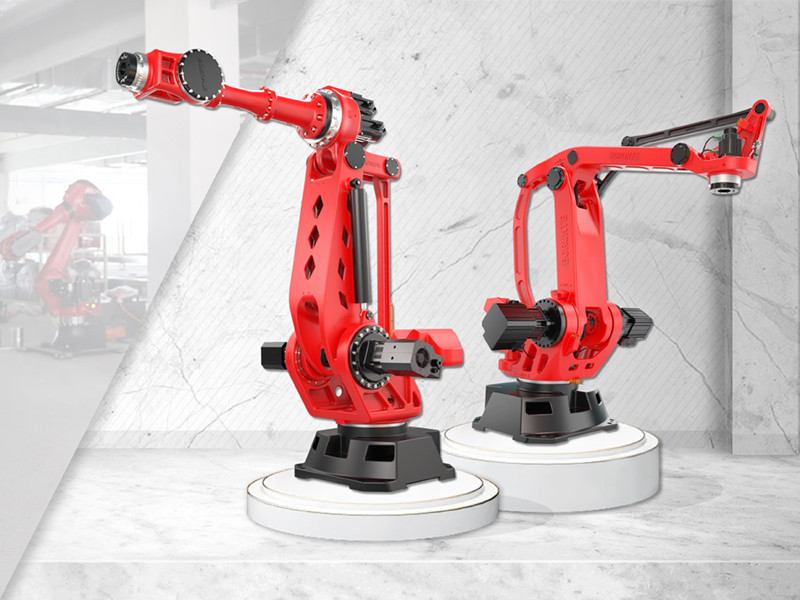
Robot type selection should be driven by motion complexity and production requirements:
6-axis robots offer high flexibility and are suitable for welding, assembly, and painting
4-axis robots provide high speed and cost efficiency for palletizing and simple handling
SCARA robots excel in high-speed planar assembly with a compact footprint
Selecting the right robot type ensures efficiency without unnecessary investment.
Step 4: Consider Environment and Safety
Environmental conditions directly affect robot lifespan and reliability:
Dust or humidity requires higher IP protection
High-temperature environments require suitable operating ranges
Explosive areas require certified explosion-proof robots
Safety systems such as fencing, light curtains, or collaborative robot features must be selected based on application risk.
Step 5: Evaluate ROI and Lifecycle Cost
Robot selection should not be based on purchase price alone.
Manufacturers should consider:
Initial investment
Operating costs
Maintenance and spare parts
Training and support
In most cases, industrial robots achieve ROI within 1–3 years when correctly matched to the application.
Common Mistakes in Industrial Robot Selection
Selecting based on specifications rather than application
Ignoring payload margin
Underestimating environmental impact
Focusing only on initial cost
Avoiding these mistakes significantly improves automation success.
Need Professional Support for Robot Selection?
For complex applications or multi-station automation lines, working with an experienced system integrator helps ensure correct robot selection, stable operation, and long-term reliability.
RBTC supports manufacturers by evaluating real production scenarios and providing application-based robot selection and system integration services.
Industrial Robot Selection FAQ
Q1: How do I choose the right industrial robot for my application?
A:
Start by defining the application type, required cycle time, working range, and part characteristics. Robot selection should always be driven by the task and production goals, not by robot model or brand.
Q2: What are the most important parameters when selecting an industrial robot?
A:
The most critical parameters include payload capacity, reach (working radius), repeatability, speed, and environmental protection level. These parameters must be matched to the actual process requirements.
Q3: How do I calculate the required payload for an industrial robot?
A:
Payload should be calculated as the total load, including the workpiece, gripper, and end-of-arm tooling. A 20–30% safety margin is recommended to ensure long-term reliability and avoid mechanical stress.
Q4: How much robot repeatability is really needed?
A:
Repeatability should match the application, not exceed it.
Handling and palletizing: ±0.1 mm is typically sufficient
Welding and assembly: ±0.02–0.05 mm is commonly required
Higher precision increases cost and is not always necessary.