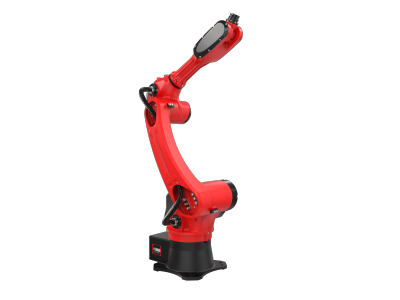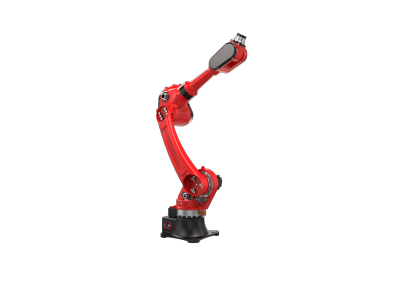
Industrial Robots in the Automotive Industry: A Deep Dive
The automotive industry has long led in adopting industrial automation. Industrial robots started as optional tools for boosting output. Now, they are essential assets in modern manufacturing.
As global auto production shifts to electric and smart vehicles, demand for flexible, precise, and efficient robot solutions is rising fast. Industry reports show the global automotive robotics market will exceed $42 billion in 2025. China will account for nearly 40% of it.
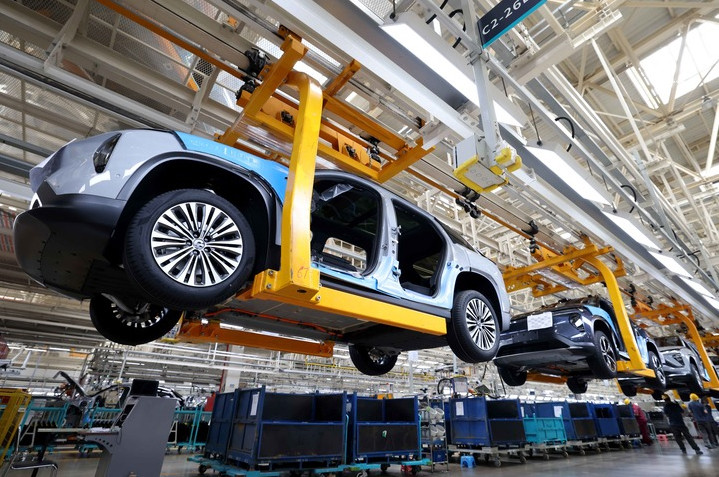
Robots reshape car production from stamping and welding to assembly and quality checks. They improve product consistency. They cut operating costs.
RBTC Robots (www.iroboticplus.com) offers custom robot solutions. We address unique auto industry challenges. Our advanced tech drives innovation and competitiveness.
As a key player in the industrial robotics industry, RBTC empowers core processes in the automotive sector—including stamping, welding, polishing, loading and unloading, and final assembly—by delivering cost-effective robots and automation equipment. We drive the intelligent upgrading of production lines for both complete vehicles and automotive components.
Core Applications
Robots fit every key stage. They solve specific tasks. Here are main uses.
1. Welding: Builds Strong Bodies
Welding is one of the most mature and common robot uses in autos. It applies especially to body assembly. Robots handle spot welding, arc welding, and friction stir welding. These tasks need high precision and consistency. They determine body structure integrity.
For example, spot weld robots connect body panels. Each car gets hundreds of weld points with minimal error. Unlike human welding, robots avoid fatigue and skill gaps. Defect rates drop over 99%. This boosts body strength and safety.
RBTC offers welding robots with advanced force control and adaptive algorithms. They integrate into gas and EV lines. Our systems manage complex curves and tolerances. They ensure stable weld quality in high-volume settings.
2. Assembly: Handles Complex Parts
Auto assembly joins thousands of parts. It ranges from tiny sensors to large engines and transmissions. Robots provide unmatched precision and speed. They reduce human errors and raise throughput.
In EV making, robots assemble battery packs with care. They handle fragile parts and align multiple components accurately. RBTC assembly robots use high-precision force sensing. They manage flexible items like circuit boards or battery covers.
Our solutions support mixed-model lines. Car makers switch models without major retooling.
3. Material Handling and Logistics
Material handling is basic but vital in auto factories. It covers raw materials, in-process parts, and finished vehicles. Robots load/unload stamping presses. They transfer parts between stations. They palletize and ship finished goods.
These systems streamline logistics. They cut damage. They eliminate heavy lifting risks, a common injury cause.
RBTC custom handling robots include configurable end-of-arm tools (EOAT). Options like vacuum or pneumatic grippers fit different materials and weights.
4. Painting and Coating: Ensures Even Finishes
Auto painting demands uniform thickness and green standards. Robots excel here. They follow precise spray paths with steady pressure and speed. Explosion-proof systems handle volatile paints safely. They meet regulations.
Robots reduce overspray waste for sustainability.
RBTC painting robots feature high-accuracy path planning and real-time control. They deliver flawless finishes. They cut paint use by 20%. Our systems work with various paints. We customize for models and needs.
5. Polishing and Deburring: Smooths Surfaces
Polishing and deburring finish engine blocks, transmissions, and panels. These tasks were labor-heavy. Dust and noise harmed workers. Robots with adaptive force control handle them efficiently. They ensure uniform surfaces. They limit worker exposure to hazards.
RBTC polishing robots use advanced force feedback. They adapt to complex shapes for even results on curves. Our user-friendly GUI and pre-built software packages deploy in 10-15 days. This minimizes downtime.
Key Trends for 2025 and Beyond
Tech advances and market shifts drive fast growth in auto robotics. Knowing these trends helps car makers stay competitive.
1. Rise of Collaborative Robots
Collaborative robots (cobots) are growing in autos. They suit human-robot tasks like assembly and inspection. Unlike isolated industrial robots, cobots use force limits and sensors for safe teamwork. This flexibility optimizes workflows for hard-to-automate jobs.
RBTC cobots have CE and ETL safety certifications. They deploy safely in shared spaces. Our intuitive interfaces make programming and reconfiguration easy.
2. Focus on Flexible Mixed Lines
Car variety is rising with EVs, hybrids, and gas models. Makers need robots for mixed lines. Flexible systems with quick swaps and modular designs matter.
RBTC robots build on modular platforms for easy customization. Adaptive controls handle varying sizes and shapes without heavy reprogramming. This supports mixed production and cuts line stops.
RBTC Robots: Your Trusted Partner
RBTC Robots (www.iroboticplus.com) understands auto challenges and chances. With years in industrial automation, we serve big OEMs and small suppliers. Our solutions boost efficiency, quality, and costs. They aid EV and smart shifts.
Key strengths include:
Custom solutions: We work closely to fit your workflow.
Advanced tech: Force control, AI, and adaptive algorithms ensure top performance.
Fast deployment: Pre-built software and easy interfaces set up in 7-15 days.
Full support: Installation, debugging, training, and maintenance included.
Take the Next Step in Auto Automation
Ready to upgrade your auto lines with advanced robots?Need welders for bodies, adaptive arms for batteries, or handlers for logistics?
RBTC has the expertise.
Contact our auto automation experts today. Book a free consult. See how our custom solutions improve efficiency, quality, and growth.
Visit www.iroboticplus.com for more on products and services.
FAQs: Industrial Robots in Autos
What processes do RBTC robots handle?
RBTC robots cover welding (spot, arc, friction stir), assembly (engines, transmissions, batteries), handling (loading, palletizing), painting/coating, and polishing/deburring. We customize for gas and EV lines.
Do RBTC solutions support mixed production?
Yes. Adaptive controls and modular designs allow seamless model switches. Quick retooling and easy programming boost flexibility and speed.
How long to deploy RBTC systems?
It varies by complexity. Standard systems install and debug in 7-15 days. Pre-built software, GUIs, and expert teams minimize stops.
Are RBTC robots safe for autos?
Yes. They comply with global standards. Industrial robots have CE certification for safe mixed environments. We test rigorously to meet auto safety rules.