Maximizing ROI: How to Optimize Industrial Robot Deployment
Optimizing industrial robot deployment is the key to maximizing return on investment (ROI). It improves robotic efficiency and system integration in real application scenarios. This directly increases production output and product quality from your investment.
RBTC is an expert in robotic integration solutions. We have delivered over 1,000 robot projects to hundreds of clients.
Through our case studies, this article explains the core logic, common pain points, and real value of optimized deployment. It offers manufacturers clear guidance from demand analysis to actual benefits.
I. What Is Industrial Robot Deployment?
Core Definition
Industrial robot deployment is a complete end-to-end project. It centers on production needs and covers the full lifecycle: demand → solution → implementation → operation and maintenance support. It is much more than just installing equipment.
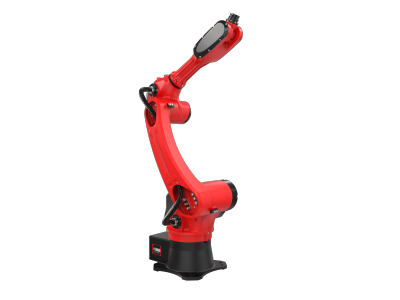
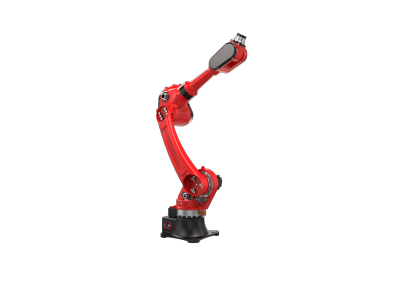
The goal is to customize and integrate robot bodies (such as six-axis robots, servo manipulators, and welding robots) with end effectors, control systems, and production line equipment. This ensures perfect fit with your specific process. It creates a seamless, closed-loop automated workflow.
RBTC stresses one principle: scenario adaptability first, full-process control second. This avoids wasting money on “automation for automation’s sake.”
Deployment Principles
The purpose of deployment is to solve core production challenges through technology. The ultimate aim is to maximize ROI:
Cost Reduction: Replace repetitive manual work. Cut labor costs, management expenses, and rework caused by human error.
Efficiency Improvement: Break through manual limits. Enable 24/7 operation. Shorten cycles. Expand capacity.
Quality Enhancement: Use robotic precision and repeatability. Improve product consistency. Reduce defect rates.
Safety Assurance: Remove workers from high-risk environments (high temperature, high pressure, high altitude, toxic areas). Lower safety risks.
Five Key Stages
Professional deployment includes five critical stages:
Solution Design: Based on the research, we customize the robot type, end effectors, control systems, and line interfaces. We also prepare an early ROI forecast.
Equipment Selection: We choose the right robots and supporting equipment (conveyors, ground rails, fixtures). RBTC provides reliable, large-volume supply of robots and related items.
Installation & Commissioning: Engineers install equipment on-site. They debug systems and optimize parameters. This ensures precision, stability, and smooth line coordination.
Training & Maintenance: We train operators. We set up long-term maintenance with 24-hour response. This keeps robots running stably over time.
II. Why Optimize Industrial Robot Deployment?
Manufacturing faces rising labor costs, skilled worker shortages, and fierce competition. Robot deployment is no longer optional. It is a must-have strategy for long-term success.
Core Pain Points
1. Mismatch Between Robot Selection and Scenarios
Manifestations: Blindly selecting high-precision, high-load robots, or prioritizing price over scenario adaptability (e.g., using six-axis robots for simple loading/unloading, causing functional redundancy; deploying SCARA robots for complex multi-angle welding, leading to inefficiency).
Impact on ROI: Excessively high procurement costs or unmet efficiency targets significantly prolong the investment payback period.
2. Lack of Systematic Integration Solutions
Manifestations: Focusing solely on robot body deployment while neglecting collaborative optimization of end effectors (EOAT), fixtures, conveyors, and safety systems; or failing to plan holistically for production line cycles and manual workstation interfaces, resulting in automation silos.
Impact on ROI: Restricted robotic efficiency, insignificant overall capacity improvement, and even production disruptions due to improper integration.
3. Insufficient Personnel Skills and Disconnected After-Sales Service
Manifestations: Frontline operators lack robotic programming and debugging skills, unable to adjust parameters per production needs; slow after-sales response to equipment failures leads to service disconnection.
Impact on ROI: Low robot overall equipment efficiency (OEE) and prolonged idle time due to inadequate after-sales support.
4. Lack of Data and Benefit Evaluation
Manifestations: Failure to establish a robust ROI evaluation system, making it impossible to quantify core indicators such as cost savings (e.g., labor, defective products) and efficiency gains (e.g., capacity growth, cycle optimization) from deployment.
Impact on ROI: Inability to accurately assess deployment value, hindering subsequent optimization and potentially leading to erroneous investment decisions.
A reliable partner is essential. Success depends on two things: tailored solutions and fast after-sales service.
RBTC focuses on client needs and support. We solve these pain points and help clients upgrade capacity.
Pain Points vs. Corresponding Advantages
Pain Point | Corresponding Advantage | ||
| High manual labor, heavy workload, safety risks | Robots replace manual work. High-risk positions eliminated. Accident rate near zero. | ||
| Order backlog in peak seasons | 24/7 operation. Large capacity increase. | ||
| Need for high precision | Stable, precise robots ensure consistent quality and higher yield. | ||
Small batches, many varieties, short cycles | RBTC solutions offer quick program changes, flexible production, and fast redeployment. |
III. Typical Solution Cases
Core deployment pain points directly constrain investment returns. Through two RBTC case studies in the daily chemical and machinery manufacturing industries, this section demonstrates how optimized deployment precisely addresses production pain points and maximizes ROI.
Injection Molding Manipulator – Plastic Packaging Bottles (Daily Chemical Industry)
Pain Points:
Manual removal caused scratches, deformation, and unstable quality.
9% scrap rate led to high rework costs.
Skilled worker shortages and high turnover.
Key Highlights:
Programmed cycle adjustments for stable removal.
Quick-change end effectors for different bottle types.
Conveyors to inspection for full automation.
Multi-robot central scheduling.
Results:
Defect rate fell from 9% to 0.8%. Scrap losses cut by 85%.
Single-line daily capacity rose 40%. Labor costs dropped significantly.
Welding Robot – Pipeline Welding (Machinery Manufacturing Industry)
Pain Points:
Pipe lengths varied from 1m to 10m with strict quality requirements.
Severe welder shortage caused frequent delivery delays.
Key Highlights:
Custom welding robot + ground rail solution for flexible coverage.
High-precision power source and weld seam tracking for real-time adjustment.
Rotating workbench for 360° welding without dead angles.
Results:
Rework costs reduced by 90%.
Single-pipe welding time shortened by 35%. Faster project delivery.
80% of high-risk manual work replaced. Safety risks near zero. Labor costs cut sharply.
IV. Summary
Optimized robot deployment solves five key manufacturing challenges: cost, efficiency, quality, safety, and flexibility. It turns investment into real profit growth.
RBTC offers proven experience, a professional team, reliable equipment, and full-lifecycle support. We transform robot deployment from a technical cost into a powerful profit engine.
Whether you need a single cell (injection molding, welding, CNC loading/unloading) or full-line automation, RBTC delivers custom solutions that work.
Facing rising labor costs, capacity shortages, or quality issues?