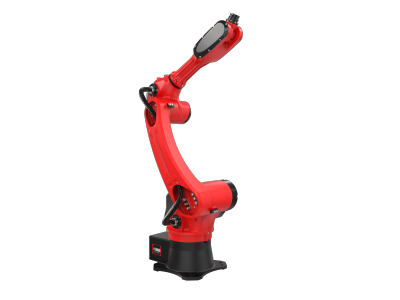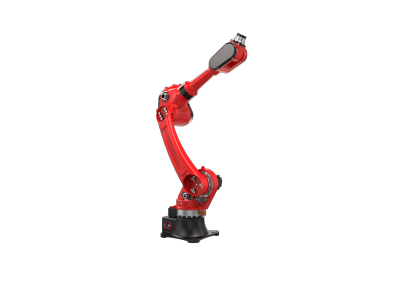
What Is a Palletizing Robot?
A Complete Guide to Factory Automation Selection and Applications
As manufacturing continues its global shift toward automation, logistics efficiency has become a critical lever for reducing costs and improving operational stability.
Within the logistics process, palletizing is the final and most labor-intensive step of material handling. Long-term reliance on manual palletizing often results in low efficiency, high labor intensity, safety risks, and inconsistent stacking quality.
The emergence of palletizing robots has fundamentally transformed traditional manual palletizing methods. Today, they are recognized as one of the core automation solutions for factories aiming to build efficient, intelligent production systems.
This guide provides a systematic overview of palletizing robots—from definition and working principles to robot types, application value, and selection considerations—helping factories evaluate whether palletizing automation is right for them and how to choose the correct solution.
1. What Is a Palletizing Robot?
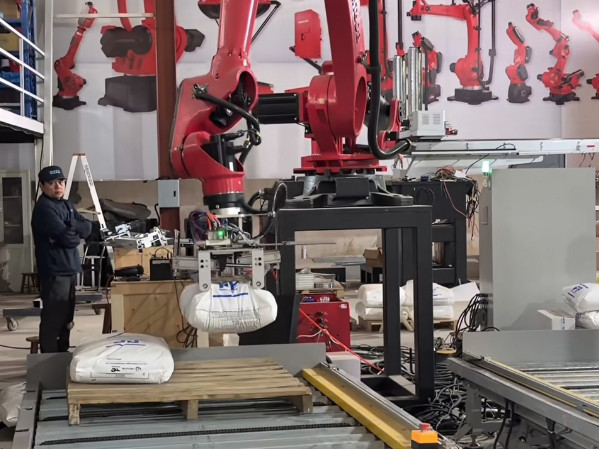
A palletizing robot is a specialized category of industrial robots designed specifically for stacking and arranging products onto pallets according to predefined patterns.
By executing programmed palletizing logic, these robots can automatically handle cartons, bags, drums, and other packaged goods with high speed, precision, and repeatability.
Compared with manual palletizing or traditional semi-automatic systems, palletizing robots offer several clear advantages:
Continuous 24/7 operation without fatigue;
High repeat positioning accuracy for uniform pallet stacks;
Strong adaptability through reprogramming and customized end-of-arm tooling.
It is important to distinguish palletizing robots from general-purpose industrial robots.
While general robots focus on flexibility across multiple tasks, palletizing robots are structurally optimized for load capacity, speed, and stacking stability, making them more suitable for logistics automation.
In real-world production environments, palletizing requirements vary significantly by industry, material type, and line speed. There is no “one-size-fits-all” solution.
Based on RBTC’s palletizing robot project experience across food, chemical, and logistics industries, effective palletizing automation starts with matching the robot system to material characteristics, throughput requirements, and available floor space—not simply selecting a standard model.
2. Core Components and Working Principles of Palletizing Robots
2.1 Key Components of a Palletizing Robot System
A complete palletizing robot workstation typically consists of four main parts:
(1) Robot Body
The robot body includes the base, joints, and arm structure. It determines the robot’s working range, payload capacity, and motion performance.
Common configurations include 4-axis palletizing robots, 6-axis palletizing robots, and in some cases collaborative palletizing robots.
(2) End-of-Arm Tooling (EOAT)
Often referred to as the robot’s “hand,” the EOAT is customized based on material type:
Vacuum grippers or clamps for cartons;
Anti-slip suction or multi-claw grippers for bags;
Custom fixtures for irregular or fragile products.
(3) Control System
The control system manages motion planning, stacking logic, and program execution. It supports manual teaching, automatic operation, and—on advanced systems—remote monitoring and data collection.
(4) Auxiliary Equipment
This includes conveyors, pallet dispensers, sensors, and safety systems, ensuring smooth material flow, automatic pallet exchange, and safe operation.
2.2 Palletizing Robot Working Process
A typical palletizing workflow follows this closed-loop logic:
Products are conveyed into the pick-up zone;
Sensors detect position and send signals to the controller;
The robot grips the product and moves it to the pallet;
Products are stacked according to the preset pattern;
Full pallets are discharged automatically, and the cycle repeats.
The entire process operates with a high degree of automation, requiring minimal human intervention for inspection and supervision.
3. Main Types of Palletizing Robots
3.1 Classification by Axis Configuration
4-Axis Palletizing Robots
Simple structure;
High speed;
Cost-effective;
Ideal for standard pallets and medium-light payloads.
This is currently the most widely used palletizing robot type.
6-Axis Palletizing Robots
Greater flexibility;
Suitable for irregular products, complex stacking patterns, and multi-SKU lines.
3.2 Classification by Material Type
Carton Palletizing Robots – Common in food, beverage, and home appliance industries
Bag Palletizing Robots – Used for cement, fertilizer, grains, and chemical powders
Drum / Irregular Load Palletizing Robots – Typically require customized grippers for stability
4. Why Do Factories Need Palletizing Robots?
For manufacturers, palletizing robots are not simply an automation upgrade—they address core operational pain points and enhance long-term competitiveness.
4.1 Higher Efficiency, Reduced Labor Dependence
Palletizing robots typically operate 2–3 times faster than manual labor, with stable 24-hour performance, significantly reducing reliance on skilled workers.
4.2 Improved Stacking Consistency and Stability
With repeatability as high as ±0.05 mm, robots ensure uniform pallet stacks, reducing product collapse risk during storage and transportation.
4.3 Enhanced Workplace Safety
In heavy-load, dusty, or high-temperature environments, palletizing robots replace manual handling, minimizing injury risks and improving working conditions.
4.4 Flexible Production and Quick Changeovers
By modifying programs or changing EOATs, palletizing robots can easily adapt to different product sizes and stacking rules—supporting flexible manufacturing and faster order response.
5. Typical Application Industries for Palletizing Robots
Thanks to their adaptability, palletizing robots are now widely deployed across multiple industries:
Food & Beverage
For cartons, bags, bottles, and drums, supporting high-speed continuous production lines.
Chemical & Building Materials
Ideal for cement, fertilizer, plastic granules, and tiles, operating reliably in dusty or hazardous environments.
Home Appliances & Electronics
Ensure precise, gentle palletizing of finished products and components to avoid damage.
Logistics & Warehousing
Integrate with automated sorting and storage systems, improving throughput for e-commerce and express logistics.
Pharmaceutical Industry
Enable clean, contamination-free palletizing that meets strict hygiene and traceability requirements.
6. Palletizing Robot Selection and Deployment Considerations
In practice, many automation projects underperform not because of equipment quality, but due to mismatches between material parameters, line speed, and site conditions.
Based on RBTC’s system integration experience, manufacturers should focus on the following:
6.1 Core Selection Factors
Material weight, size, shape, and packaging;
Required throughput and cycle time;
Workshop layout and available space.
Light, standardized products typically suit 4-axis robots, while heavy or irregular loads often require 6-axis solutions.
6.2 End-Effector Customization
Proper EOAT design is critical for palletizing stability:
Clamps for cartons and rigid boxes;
Anti-slip suction for bags;
Custom fixtures with pressure sensors for fragile or irregular items.
6.3 System Integration and Line Compatibility
Plan conveyor interfaces, pallet supply systems, and safety fencing in advance to avoid material flow interruptions and equipment interference. Maintenance space should also be reserved.
6.4 After-Sales Support and Maintenance
Choose suppliers with complete service capabilities, including on-site installation, operator training, fast response times, and reliable spare-parts supply—especially for international projects.
6.5 Cost-Benefit Evaluation
Evaluate ROI based on production volume, labor costs, and material loss reduction to avoid blind investment decisions.
7. Common Misconceptions About Palletizing Robots
Q1: Are palletizing robots only for large enterprises?
A:
No. Compact 4-axis palletizing robots offer affordable automation for SMEs.
Q2: Are automation costs really high with slow returns for palletizing robots?
A:
While initial investment exists, most projects recover costs within 1–2 years through labor savings and efficiency gains.
Q3: Can all materials be palletized automatically with a palletizing robot?
A:No. Deformable or highly variable materials may require testing and customization.
Q4: Does a palletizing robot’s payload simply equal the product’s weight?
A:
Incorrect. Payload calculations must include EOAT weight and dynamic forces. A 10–20% payload margin is recommended.
Conclusion
In today’s automation-driven manufacturing landscape, palletizing robots are no longer optional—they are essential tools for improving logistics efficiency and stabilizing production output.
Introducing a palletizing robot is not merely an equipment purchase, but a system-level decision closely tied to production planning, labor structure, and long-term operations.
When standard solutions cannot fully meet on-site requirements, experienced robot application partners like RBTC can deliver customized palletizing systems through tailored EOAT design, cycle optimization, and seamless system integration—helping manufacturers build reliable, efficient, and scalable palletizing automation.