Why Do Factories Need Industrial Robots?
Introduction: Industrial Robots Are Not an Upgrade Option, but a Tool for Operational Stability
In the manufacturing, the question of whether industrial robots are necessary is often reduced to cost: labor savings and payback periods. However, from a long-term factory operations perspective, this view is incomplete. What truly defines manufacturing competitiveness is not annual labor cost, but production stability, quality consistency, delivery reliability, and risk predictability.
The real value of industrial robots lies in these long-term operational dimensions. Rather than replacing all human labor, robots help factories reduce uncertainty through standardized and system-driven production.
Based on long-term experience from industrial robot integration projects across various manufacturing environments—including those supported by RBTC—industrial robots are increasingly being recognized as a foundational production resource rather than just a short‑term efficiency‑enhancing tool.
1. Production Stability: Why Stability Matters More Than Peak Efficiency
In many factories, the key operational challenge is not achieving maximum output, but maintaining stable and predictable production over long periods.
In real factory operations, production efficiency is rarely constant. Manual processes are influenced by shift differences, skill levels, fatigue, and workforce turnover. Even with identical process documentation, results can vary significantly, affecting scheduling, inventory control, and delivery reliability.
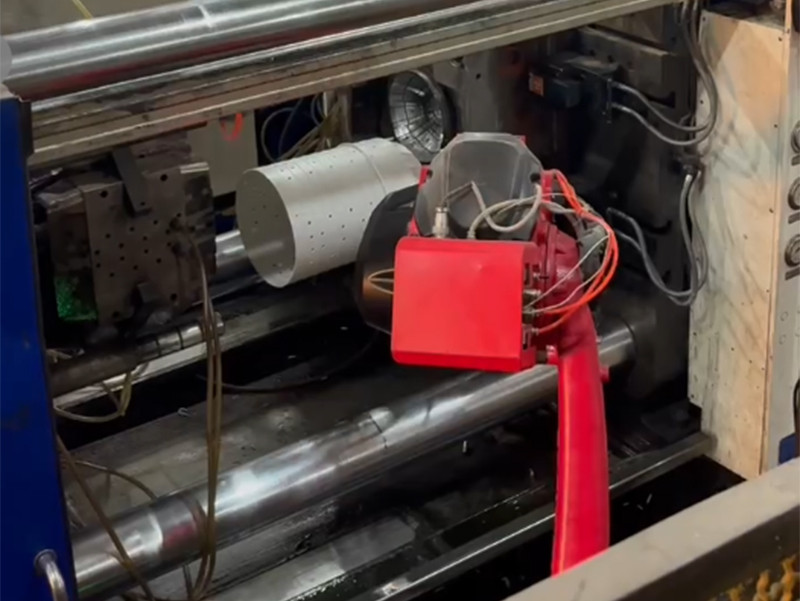
Industrial robots execute tasks through programmed motion paths and fixed process parameters, maintaining consistent cycle times over long periods. For factories, this stability enables predictable capacity, reliable planning, and long-term line optimization.
Industrial robots, once properly integrated, operate with fixed motion paths, repeatable cycle times, and minimal performance fluctuation. This stability allows factories to:
Plan production schedules more accurately;
Reduce unexpected downtime;
Improve delivery reliability.
In typical industrial robot projects delivered by RBTC, factories often prioritize consistent cycle times and predictable capacity over short-term efficiency gains, as this directly affects production planning and customer commitments.
2. How Quality Consistency Shapes Long-Term Cost Structure
Quality variation is one of the most expensive hidden costs in manufacturing. In manual processes, differences in technique, fatigue levels, and judgment often lead to inconsistent product quality.
Quality issues extend beyond defective products. Rework, scrap, additional inspection, delivery delays, and customer complaints all amplify long-term costs. Manual operations inevitably introduce variability, keeping quality-related costs unstable.
In repetitive processes such as welding, assembly, coating, and material handling, industrial robots maintain consistent paths, speeds, and parameters. Over time, reduced rework and scrap rates significantly improve the overall cost structure.
While robots do not eliminate defects entirely, they significantly reduce variability.
Long-term observations from industrial robot deployments show that quality-related costs rarely decrease immediately, but tend to stabilize and decline after sustained operation.
In several manufacturing projects supported by RBTC, factories reported that reduced rework and scrap rates became noticeable only after continuous robot operation, rather than during the initial commissioning phase.
3. How Industrial Robots Alleviate Labor Dependence in Manufacturing
Many manufacturers face structural labor challenges: skilled worker shortages, declining young labor supply, and difficulty sustaining physically demanding roles. Relying solely on manual labor tightly couples production capacity with workforce stability.
Many factories face increasing difficulty in recruiting and retaining skilled workers, especially for repetitive, high-intensity, or hazardous tasks.
Industrial robots handle repetitive, high-intensity, or hazardous tasks, allowing human workers to shift toward monitoring, optimization, and coordination roles.
Industrial robots do not replace human expertise entirely, but they shift the workforce structure:
Robots handle repetitive and precision-critical operations;
Skilled workers focus on supervision, optimization, and problem-solving.
This transition helps factories reduce operational risk related to labor shortages and knowledge loss due to turnover.
From long-term automation projects, including those implemented with RBTC, factories increasingly view robots as a way to stabilize production capacity amid changing labor markets.
4. Reducing Unplanned Downtime and Improving Delivery Reliability
Unplanned downtime is among the most costly risks in manufacturing. A single unexpected stoppage can affect immediate output and trigger downstream congestion, delivery delays, and customer loss.
Industrial robots support long-term stable operation and enable preventive maintenance through condition monitoring. Compared with reactive, labor-driven maintenance, this approach allows factories to identify risks early and reduce unexpected downtime.
5. How Industrial Robots Flexibility Prepares Factories for Future Shifts
Factories must adapt to changing product mixes, order volumes, and process requirements. While dedicated machines may be efficient for specific tasks, their adaptability is limited when demand shifts.
Industrial robots offer programmability and modular configurations. By adjusting programs or end-effectors, they can adapt to new products and processes, making them long-term assets rather than short-term equipment.
6. The Core Value of Industrial Robots: Reducing Uncertainty
From a factory perspective, industrial robots are not simply faster tools, but more stable systems. By standardizing production, reducing human variability, and improving predictability, they help establish sustainable operations.
When stability, quality, and delivery reliability become system capabilities rather than individual skills, industrial robots become integral to long-term manufacturing competitiveness.
From an operational perspective, industrial robots gradually shift from being seen as equipment investments to becoming part of the factory’s production infrastructure.
They contribute to:
Predictable operating costs;
Improved safety in hazardous environments;
Scalable production capacity.
This perspective is commonly shared by manufacturing teams involved in long-term automation projects, including those working with system integrators such as RBTC, where the focus moves from short-term ROI to long-term operational resilience.
Conclusion
Factories need industrial robots not because they are advanced, but because they make production more stable, risks more controllable, and the future more predictable. In long-term manufacturing competition, this certainty is the true value.
Industrial robots are not merely about technology; they are more about how factories can maintain their production capacity in an increasingly uncertain environment and deliver reliable returns on investment for users.
Contact RBTC
to choose the right industrial robot for your factory