Everything You Should Know About Industrial Robots: Advantages and Disadvantages
Industrial robots have moved from being optional automation tools to becoming foundational assets in modern manufacturing. As factories worldwide face rising labor costs, quality pressure, and the need for stable production, industrial robots are increasingly adopted not only to improve efficiency, but to support long-term operational stability.
This guide provides a structured, factory-focused overview of what industrial robots are, where they create value, where their limitations remain, and how manufacturers should evaluate them realistically—based on common industrial deployment scenarios rather than marketing claims.
I. What Are Industrial Robots?
An industrial robot is a programmable, automated machine designed to perform repetitive, precision-driven, or high-risk tasks within manufacturing environments. Unlike service robots, industrial robotic systems are built for durability, repeatability, and continuous operation under demanding industrial conditions.
Common types of industrial robots include:
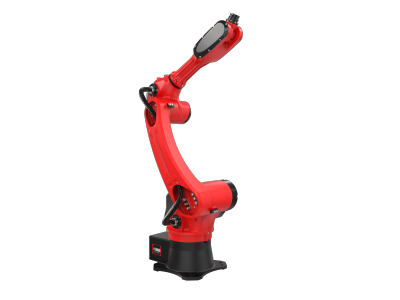
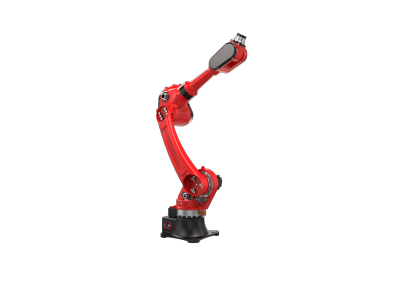
6-axis industrial robots, widely used for welding, machining, and complex assembly;
SCARA robots, optimized for high-speed pick-and-place and assembly tasks;
Collaborative robots (cobots), designed to safely work alongside human operators.
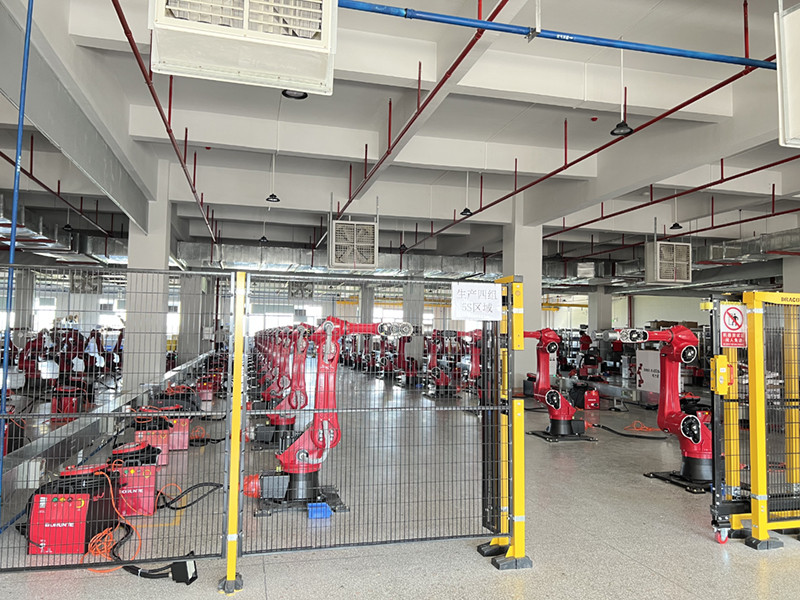
These robots are commonly deployed across automotive manufacturing, metal fabrication, electronics (3C), logistics, and general industrial production—each with different requirements for accuracy, payload, speed, and flexibility.
II. Key Advantages of Industrial Robots in Manufacturing
1. Improved Productivity and Stable Output
Industrial robots can operate continuously without fatigue, breaks, or shift changes. In high-volume production environments, this enables predictable cycle times and consistent throughput.
Rather than simply increasing speed, robots help factories stabilize production capacity, reducing fluctuations caused by human availability, skill differences, or fatigue. This stability is often more valuable than short-term efficiency gains, especially for manufacturers with strict delivery schedules.
2. Consistent Quality and Reduced Rework
Most industrial robots achieve positioning accuracy within ±0.02 mm, allowing them to execute tasks with repeatable precision. This consistency significantly reduces quality variation caused by manual operation.
In processes such as welding, assembly, and precision handling, long-term robot operation typically leads to:
Lower defect rates.
Reduced rework and scrap.
More predictable quality outcomes across batches.
Over time, this stability helps factories control hidden quality-related costs rather than constantly reacting to defects.
3. Addressing Labor Shortages and Workforce Instability
Many manufacturing sectors face ongoing shortages of skilled labor, particularly for repetitive, physically demanding, or hazardous tasks. Industrial robots are commonly introduced to take over these roles—not to eliminate human jobs, but to reduce dependency on unstable labor availability.
By reallocating human workers to supervision, process optimization, and maintenance roles, factories can achieve a more resilient workforce structure with lower turnover and training pressure.
4. Enhanced Workplace Safety
Industrial robots are especially valuable in environments involving high temperatures, heavy loads, fumes, or repetitive strain. By removing operators from hazardous zones, factories can reduce accident risks and long-term health issues.
Collaborative robots further improve safety by incorporating force-limiting and proximity detection technologies, allowing controlled human–robot interaction in shared workspaces.
5. Support for Digital and Smart Factory Transformation
Modern industrial robots are often integrated with MES and ERP systems, enabling real-time monitoring of production data such as cycle times, fault records, and equipment utilization.
This connectivity supports:
Predictive maintenance planning.
Data-driven process optimization.
Better production transparency.
As a result, industrial robots often serve as a practical entry point for broader smart factory initiatives.
III. Potential Disadvantages and Limitations of Industrial Robots
1. High Initial Investment
The upfront cost of industrial robots—including system integration, tooling, safety infrastructure, and training—can be significant. For small and medium-sized manufacturers, the payback period may extend beyond short-term planning cycles.
A realistic ROI assessment should account not only for labor savings, but also for long-term stability benefits such as reduced downtime, quality consistency, and deferred capacity expansion.
Rather than selecting an industrial robot based on specifications alone, manufacturers typically achieve better outcomes by aligning automation decisions with their budget constraints and real production requirements.
In practice, experienced robot application partners such as RBTC often support this evaluation process by helping clarify system suitability, cost boundaries, and long-term operational considerations.
2. Dependence on Technical Skills
Industrial robots require skilled personnel for programming, maintenance, and troubleshooting. A shortage of qualified technicians can increase downtime risks if support resources are limited.
In practice, many factories address this by combining internal operator training with external technical support during the early stages of robot deployment.
3. Limited Flexibility in Non-Standard Tasks
Traditional industrial robots perform best in structured, repeatable processes. For highly customized or variable tasks, extensive reprogramming and fixturing may be required.
While collaborative robots improve flexibility, they often trade speed and payload capacity for adaptability, making system selection a key factor.
4. Maintenance and Downtime Considerations
Like any industrial equipment, robots require regular maintenance. Component wear, software updates, and calibration are necessary to maintain performance.
Unplanned downtime—though less frequent than in manual operations—can still occur, emphasizing the importance of preventive maintenance and system-level planning.
IV. How Manufacturers Can Maximize the Value of Industrial Robots
Factories that achieve long-term success with industrial robots typically focus on:
Targeted automation: Prioritizing high-impact processes such as welding, handling, or precision assembly.
System compatibility: Ensuring robots integrate smoothly with existing production lines.
Progressive implementation: Expanding automation in phases rather than full-scale replacement.
Skill development: Training operators and technicians to support stable daily operation.
In practical industrial robot integration projects, these factors often matter more than the specific robot model itself.
Conclusion: A Long-Term Manufacturing Asset, Not a Short-Term Tool
Industrial robots offer clear advantages in productivity, quality consistency, safety, and operational stability. However, their true value emerges over long-term operation rather than immediate cost reduction.
For manufacturers, the key question is not whether industrial robots are “worth it” in theory, but where and how they fit within real production conditions. When selected and implemented based on actual process needs, industrial robots become a durable foundation for sustainable manufacturing.
When manufacturers evaluate industrial robots, the key is not whether automation is advanced, but whether it fits the reality of their production process.
Based on practical integration experience across multiple industries, RBTC emphasizes early technical assessment to help factories clarify suitability, system boundaries, and long-term operational expectations before moving forward.