Top 10 Chinese Industrial Robot Manufacturers: 2026 Guide
Leading Industrial Robot Manufacturers in China
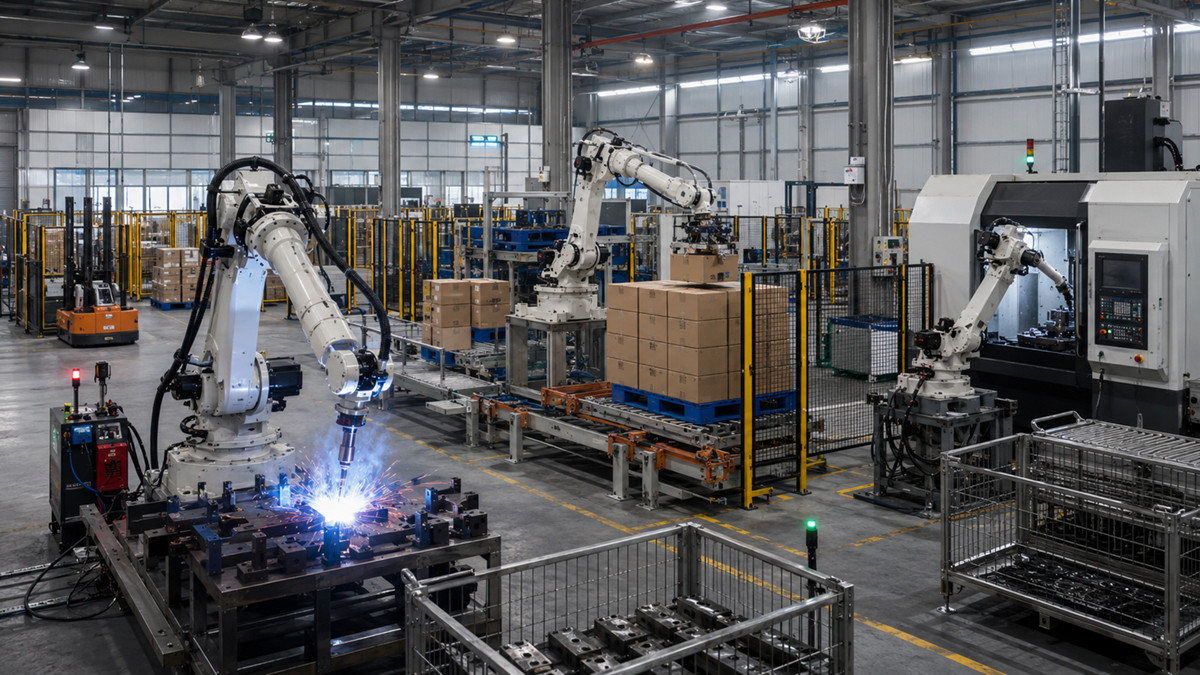
According to statistics from the International Federation of Robotics (IFR), China accounts for more than half of all new industrial robot installations worldwide each year, making it the world’s most important industrial robotics market.
Below are 10 leading Chinese industrial robot manufacturers. Many of these companies have developed key components in-house, including robot controllers, servo drives, and reducers, and are increasingly challenging the long-standing dominance of global robotics leaders such as ABB, FANUC, Yaskawa, and KUKA.
This list is designed primarily as a reference for procurement engineers and industrial automation buyers. It is not ranked solely by shipment volume. Instead, the manufacturers are evaluated across several practical purchasing criteria, including robot performance, application experience, system integration capabilities, and suitability for different automation projects.
| Brand | Location | Typical Applications | Known For |
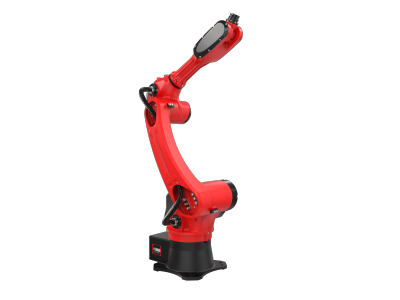
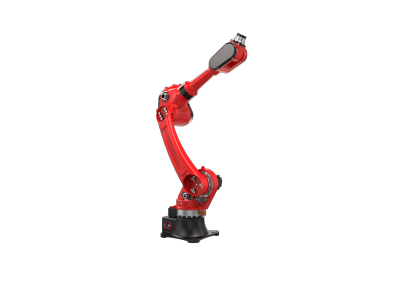
| RBTC | Dongguan | Welding, material handling, palletizing, metalworking, machine tending, injection molding | 6-axis industrial robots and turnkey, one-stop automation solutions |
| ESTUN | Nanjing | Welding, bending, die casting, palletizing, handling, machine tending, heavy-payload applications | Chinese-developed industrial robots and servo motion-control solutions with vertically integrated core components |
| EFORT | Wuhu | Welding, painting, grinding, handling, palletizing, manufacturing systems | Painting and welding robots backed by strong automotive automation integration capabilities |
SIASUN | Shenyang | Welding, handling, machine vision, logistics automation, multi-robot collaboration | AGV/AMR mobile robots and comprehensive smart manufacturing solutions |
Inovance | Shenzhen | SCARA, 3C electronics, lithium batteries, photovoltaics, display panels, assembly, machine tending | Servo systems, VFDs, and full-stack industrial automation solutions including robot bodies |
STEP | Shanghai | Welding, cutting, assembly, machine tending, grinding, handling, sorting, palletizing | Elevator control systems, servo drives, VFDs, and general-purpose industrial robots |
GSK CNC | Guangzhou | CNC machine tending, press tending, welding, palletizing, SCARA applications, machining | CNC systems, machine-tool automation, and independently developed industrial robot series |
Peitian | Beijing | Handling, welding, machine tending, grinding, assembly | Independently developed industrial robots with a focus on high-performance SCARA robot platforms |
Turin | Shanghai | Welding, grinding, palletizing, packaging, assembly, machine tending | Welding-focused robot portfolio covering 6-axis articulated robots and SCARA robots |
ROKAE | Beijing | Welding, palletizing, painting, handling, standardized automation cells | High-precision flexible and collaborative robots with advanced motion-control technology |
For a customized RBTC quotation for any of the robot categories below, contact us at admin@iroboticplus.com or via WhatsApp / WeChat: +86 138 2698 1851.
How to Choose the Right Industrial Robot Manufacturer for Your Application
There is no single “best” Chinese industrial robot manufacturer for every automation project.
A more effective selection process starts with your actual production requirements. First identify the engineering specifications that determine system performance. Then evaluate which robot platform, process package, system integration capability, and service model best match those requirements.
Robotic Welding
When evaluating Chinese welding robot manufacturers, the 6-axis robotic arm should never be considered in isolation. The success of a robotic welding system depends on how effectively the robot works with the complete welding process.
The first question to ask is whether the supplier provides a mature and proven arc-welding package.
For most industrial buyers, a well-developed welding package should provide validated integration between the robot controller, welding power source, welding torch, wire feeder, safety system, and welding software.
When purchasing a robotic welding system, compare the complete robot-and-welding ecosystem, rather than focusing only on payload, reach, and repeatability.
For standardized structural steel welding, a manufacturer with mature welding cells and a strong network of local system integrators may be sufficient.
For more demanding applications involving complex weld seams, coordinated positioners, vision-guided welding, or strict process-control requirements, preference should be given to suppliers with deeper welding engineering expertise and a stronger project track record.
Palletizing and Material Handling
When evaluating a palletizing robot manufacturer or a general-purpose material-handling robot, four specifications have the greatest impact on purchasing decisions:
Payload, reach, cycle time, and allowable wrist load.
Payload calculations must include everything carried by the robot—not simply the weight of the product. Grippers, tooling, brackets, cables, and other end-of-arm equipment all need to be included.
Cycle time should also not be taken directly from a product brochure.
A robot’s rated maximum speed is not the same as its actual palletizing throughput. Real production capacity is affected by factors including:
Pick-and-place travel distance
Vertical lifting distance
Part orientation and rotation
Acceleration and deceleration limits
Gripper actuation time
Conveyor synchronization
Pallet pattern design
For high-speed repetitive palletizing applications, prioritize manufacturers that offer dedicated palletizing robot models, validated gripper integration, pallet-pattern planning software, and real-world cycle-time verification experience.
For mixed-product handling applications, a more versatile 6-axis industrial robot platform may provide greater flexibility.
CNC Machine Tending
CNC machine tending is fundamentally a system integration application.
Payload and reach are important, but reliable communication between the robot, CNC machine, tooling, safety system, and overall production process is what determines whether the automation cell will operate consistently.
For CNC robotic automation projects, machine compatibility should therefore be one of the first considerations.
Confirm how the robot communicates with the machine tool for functions such as:
Cycle start
Machining complete
Alarm status
Chuck status
Machine door open/close status
Machine-ready signals
Communication may be handled through standard digital I/O, PLC communication, or deeper integration via an industrial fieldbus.
Gripper design is equally important.
Machine-tending robots often need to handle both raw parts and finished components, which may differ in diameter, orientation, dimensions, and surface condition.
A dual-gripper configuration can allow the robot to unload a finished component while simultaneously carrying the next raw workpiece, significantly reducing cycle time.
Suppliers that have already integrated robots with similar CNC lathes, machining centers, presses, or grinding machines are considerably easier to evaluate than manufacturers whose brochures simply state that their robots “support machine tending.”
Electronics and 3C Manufacturing
Robot selection for electronics manufacturing is very different from welding, palletizing, or heavy-duty material handling.
For applications involving large volumes of small components, SCARA robots are often better suited than high-payload 6-axis robots.
SCARA robots are particularly effective for:
High-speed horizontal movement
Pick-and-place operations
Insertion tasks
Assembly
Compact production environments
For these applications, buyers should evaluate cycle time, operating stability, repeatability, machine footprint, and vision-system integration capabilities.
Actual electronics-line productivity is also influenced by factors beyond robot speed, including:
Camera image acquisition time
Incoming part orientation
Conveyor synchronization
Fixture tolerances
Screw-feeding systems
PLC coordination and scheduling
For this reason, robot manufacturers should not be evaluated solely on the maximum advertised speed of the robot itself.
Painting Robots and Hazardous Environments
Explosion-proof painting robots require a completely different selection approach from conventional material-handling robots.
Payload, reach, wrist movement, and trajectory performance remain important, but the first priority should be confirming that the equipment has the appropriate official certification for the intended hazardous environment.
Certification documents should clearly identify both the robot models covered and the permitted operating conditions.
Buyers should also verify which components can be located inside the hazardous area and which must remain outside it.
This includes the:
Robot controller
Teach pendant
Cables
Painting equipment
Ventilation system
Grounding system
Electrical components
Any equipment installed in the hazardous area may also need to satisfy additional explosion-protection requirements.
Chinese Industrial Robots vs. ABB, FANUC, KUKA, and Yaskawa
The practical question is not whether Chinese industrial robots are simply “better” or “worse” than international brands.
For industrial buyers, the more useful question is:
Which solution provides the lowest project risk and best overall value for my factory, my application, and my local service environment?
That means comparisons should go far beyond the purchase price of the robot itself.
| Comparison Factor Chinese Robot Manufacturers Leading International Brands | Chinese Robot Manufacturers | Leading International Brands |
| Initial CAPEX | Generally offer a price advantage, especially for standard robot arms and complete automation cells | Typically require higher upfront investment for comparable configurations |
| Application Expertise | Strong performance in mainstream applications, although capability varies significantly between manufacturers and integrators | Large application libraries and extensive process expertise accumulated across many industries |
| Installed Base | Large and rapidly growing installed base, particularly in China | Extensive global installed base across multiple industries |
Local Service | Excellent domestic service coverage in China; overseas support depends heavily on the manufacturer and local partners | Well-established service systems in mature markets with more predictable support coverage |
Integration Ecosystem | Developing rapidly, with particular advantages when integrated with Chinese automation components | Broad compatibility, mature system-integrator networks, and extensive supporting software ecosystems |
Customization | Often more commercially flexible when project-specific customization is required | Generally more standardized, although advanced engineering customization is also available |
Final Recommendation: Choose by Application, Not by Ranking
Final Recommendation: Choose by Application, Not by Ranking
There is no universally best Chinese industrial robot manufacturer.
The right supplier is the one that can minimize the technical and operational risks of your specific automation project.
Before making a final purchasing decision, compare manufacturers across four core areas.
1. Robot Suitability
Does the recommended robot model meet your actual requirements for:
Payload
Reach
Working envelope
Cycle time
Process performance
A robot that looks suitable on a specification sheet may still be a poor fit once tooling weight, installation layout, motion paths, and real production cycle requirements are taken into account.
2. Application Engineering Capability
Has the supplier successfully delivered similar applications?
Relevant experience may include:
Robotic welding
Palletizing
Machine tending
Electronics assembly
Painting
Grinding
Material handling
Other specialized industrial processes
A proven application history is often more valuable than theoretical robot specifications alone.
3. Certification and Compliance
Can the supplier provide complete documentation and certifications for the specific robot model and your target market?
This is particularly important for overseas projects and applications involving safety, hazardous environments, or market-specific machinery regulations.
4. Service Network
Determine who will be responsible after the system is delivered.
Key questions include:
Who provides technical support?
Where are spare parts stocked?
How are warranty claims handled?
Is on-site engineering service available?
How quickly can critical failures be addressed?
The complete project value should always be considered instead of looking only at the purchase price of the robotic arm.
A low-cost robot can ultimately become more expensive if it requires extensive additional engineering work, has long spare-parts lead times, or lacks reliable local after-sales support.
When conducting an initial supplier screening or requesting quotations, provide manufacturers with five key pieces of information:
Application, payload, reach, target cycle time, and destination market.
These details are usually enough to identify which robot platforms and manufacturers deserve a more detailed technical evaluation.
Tell us about your product, manufacturing process, and automation requirements.
Our engineering team can develop a customized robotic automation solution based on your production needs and provide a project-specific quotation.