
Home / All / Industrial Robot Selection FAQs / What Level of Precision Can Industrial Robots Achieve?
What Level of Precision Can Industrial Robots Achieve?
Q1: What level of precision can industrial robots typically achieve?
A:
Industrial robot precision is mainly evaluated by repeatability and absolute accuracy, which vary depending on robot type, technical level, and application. In practical industrial use, typical precision levels include:
General-purpose robots (material handling, palletizing):
Repeatability typically ranges from ±0.1 mm to ±0.5 mm, sufficient for basic material handling tasks.
Mid-range precision robots (welding, standard assembly):
Repeatability usually falls between ±0.02 mm and ±0.1 mm, suitable for most manufacturing applications.
High-precision robots (electronics assembly, micro-part handling):
Repeatability can reach ±0.01 mm or better, meeting the requirements of precision manufacturing.
Robot selection should focus on whether the precision meets actual process tolerances, rather than pursuing maximum specifications.
Q2: What is the difference between repeatability and absolute accuracy in industrial robots?
A:
These are the two key precision indicators for industrial robots, with different focuses:
Repeatability:
The deviation when the robot repeatedly returns to the same programmed position. It reflects consistency and is the most commonly used precision metric in industrial applications.
Absolute accuracy:
The deviation between the robot’s actual position and its theoretical calculated position. It reflects single-position accuracy.
In simple terms, repeatability measures consistency, while absolute accuracy measures positional correctness.
Q3: What factors affect the actual precision of an industrial robot?
A:
Actual robot precision is influenced by multiple factors, including:
Mechanical structure: joint transmission accuracy, rigidity, and bearing quality.
Drive and control system: servo response, encoder resolution, and control algorithms.
Payload and working range: operating near maximum payload or reach reduces precision.
Environmental conditions: temperature changes, dust, vibration, and humidity.
Q4: How do precision requirements differ by application?
A:
Precision requirements vary significantly depending on the process:
Material handling / palletizing:
Low precision demand; ±0.1 mm-level repeatability is generally sufficient.
Welding / cutting:
Requires consistent paths; repeatability of around ±0.05 mm is typically recommended.
General mechanical assembly:
Higher precision needed for alignment; ±0.02 mm-level repeatability is common.
Precision electronics assembly:
Extremely high precision required; high-precision robots are necessary.
Q5: Are high-precision industrial robots always better?
A:
No. High-precision robots usually come with higher purchase costs, more complex commissioning, and increased maintenance requirements.
If the application does not require high precision, choosing a high-end robot may result in unnecessary cost without performance benefits.
The key principle is to balance precision, cost, and long-term stability based on actual production needs.
Q6: How can industrial robot precision be maintained in production?
A:
Maintaining stable precision requires proper selection, installation, and maintenance:
Avoid long-term operation at maximum payload or reach;
Ensure a rigid and level installation base;
Perform regular calibration and preventive maintenance;
Implement protective measures in harsh environments such as high temperature, dust, or humidity.
Q7: How do I know if a robot’s precision meets my production requirements?
A:
Robot precision should be compared against process tolerance, part consistency, and quality standards.
If the robot’s repeatability is tighter than the required process tolerance, it is generally sufficient for stable production.
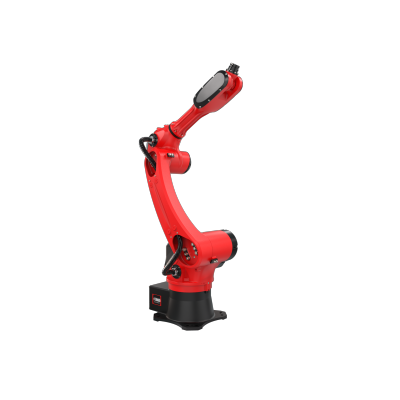
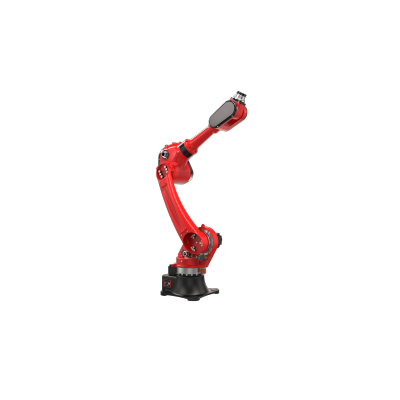
Are you looking for a reliable manufacturer of Six Axis Robot products?
We can quickly provide customers with market analysis, technical support and customized services.Contact Person

- Full Name:
- Tommy
- Tel:
+86 13826981851
- Email:
- Tommy@iroboticplus.com
- WhatsApp:
- 8615322835803
- Address:
- Room 102, No. 30, Hengfeng 2nd Road, Daguo, Changping Town, Dongguan City, Guangdong Province