
Can Industrial Robots Be Customized for Specific Applications?
Q1: Can industrial robots be customized for specific applications?
A:
Yes. Industrial robots can be customized for specific applications, which is a common approach to address complex processes and non-standard production conditions. By adjusting robot structure, protection configuration, end-of-arm tooling, control systems, and system integration, industrial robots can better match actual production requirements, improving operational stability and efficiency.
RBTC provides customized solutions based on standard industrial robot platforms, helping manufacturers achieve better application matching while ensuring reliability.
Q2: What aspects of industrial robots can be customized?
A:
Industrial robot customization typically includes:Mechanical structure and protection
Adjusting robot dimensions or protection level according to workspace, installation, or environmental conditions (high temperature, dust, humidity, explosion-proof, etc.).
End-of-arm tooling (EOAT) customization
Customizing grippers, suction cups, welding guns, polishing heads, or other specialized tools according to part shape, material, and process requirements.
Control system and software optimization
Optimizing motion paths, cycle time, precision, and user interface to simplify operation.
System integration and coordination
Integrating robots with injection molding machines, CNC machines, conveyors, or inspection equipment to form a complete automated unit.
RBTC usually follows a “minimum necessary customization” principle to avoid redundant features and maximize cost-effectiveness.
Q3: Which applications are better suited for customized industrial robots?
A:
Customized industrial robots are particularly suitable for:Non-standard parts or complex processes
Such as irregular part handling or curved-surface welding/polishing where standard robots cannot reliably adapt.
Special operating environments
High-temperature workshops, near injection molding machines, high humidity, heavy dust, or explosion-proof areas.
High-performance applications
High-precision assembly, high-speed welding, or continuous stable production lines.
Integrated automated production lines
Where robots must coordinate with multiple machines to achieve full-process automation.
Q4: What is the typical process for implementing customized industrial robots?
A:
The typical process for customized industrial robots includes:Application analysis and on-site assessment;
Customized solution design and technical specification confirmation;
Robot and system manufacturing and programming;
Factory testing and pre-commissioning;
On-site installation, integration, and optimization;
Acceptance, operator training, and technical handover.
RBTC usually provides on-site commissioning and parameter optimization to ensure the customized solution matches the actual production line.
Q5: What are the advantages and limitations of customized industrial robots compared to standard robots?
A:
Advantages:Precisely meets specific application requirements, improving efficiency;
Better adaptation to special environments or complex processes;
Reduces redundant functions, optimizing long-term operating costs.
Limitations:
Longer delivery time than standard models;
Higher initial investment;
Maintenance of custom components requires reliable service support.
Decision to customize should consider production stability, service life, and ROI.
Q6: What should be considered when selecting customized industrial robots?
A:
Key considerations:Experience of manufacturer or system provider in customization;
Clear and verifiable technical specifications;
Compatibility with existing equipment and future expansion;
After-sales response and spare parts support;
Total cost of ownership and ROI.
RBTC usually assists customers in evaluating long-term costs during the solution phase to avoid future retrofit risks.
Q7: Are customized industrial robots suitable for small and medium-sized enterprises (SMEs)?
A:
Yes, but SMEs should evaluate carefully.For stable, non-standard tasks or special operating conditions, customization can improve efficiency and reduce labor dependency.
For frequently changing or simple processes, lightweight customization based on standard models may balance cost and flexibility.
RBTC offers modular and phased customization solutions for SMEs to balance investment and operational flexibility.
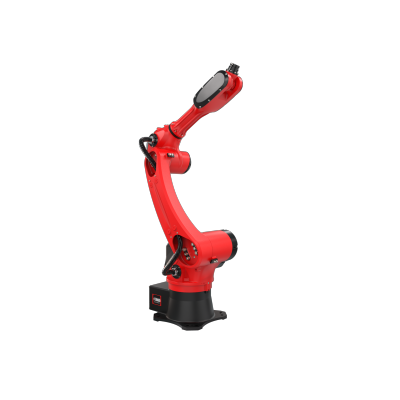
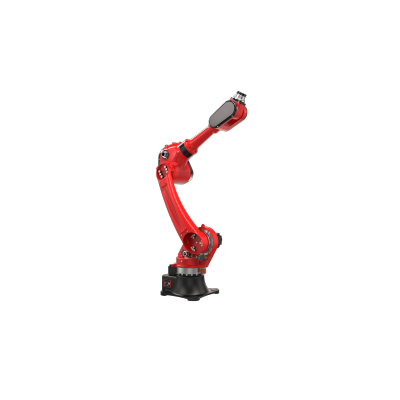
Are you looking for a reliable manufacturer of Six Axis Robot products?
We can quickly provide customers with market analysis, technical support and customized services.Contact Person

- Full Name:
- Tommy
- Tel:
+86 13826981851
- Email:
- Tommy@iroboticplus.com
- WhatsApp:
- 8615322835803
- Address:
- Room 102, No. 30, Hengfeng 2nd Road, Daguo, Changping Town, Dongguan City, Guangdong Province