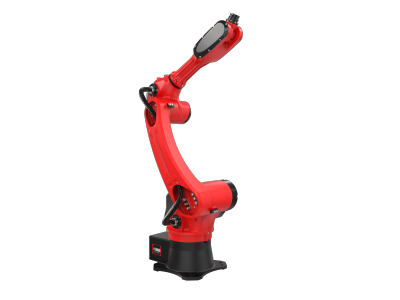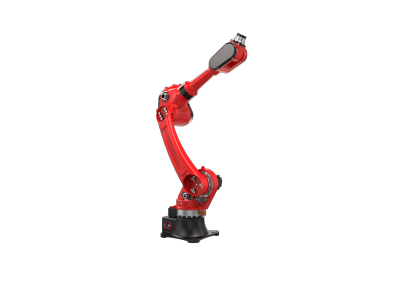
CNC Loading & Unloading Robot Commissioning Project
Project Name: CNC Loading & Unloading Automation Commissioning
Service Customer: Leading Indonesian Precision Manufacturing Enterprise
I. Project Background
The client is a leading enterprise in Indonesia's precision manufacturing industry. Its CNC loading & unloading automation upgrade directly impacts capacity improvement and market competitiveness.
This project is crucial for enhancing production efficiency and stabilizing product quality.
To ensure smooth project commissioning, RBTC formed an exclusive technical team for on-site commissioning in Indonesia.
This service protects the client's main interests. It also highlights RBTC's strengths in adapting locally and responding fully to foreign markets.
- It helps RBTC look into the industrial automation markets in Indonesia and Southeast Asia.
- It also helps RBTC build a strong international service reputation.
II. On-site Commissioning & Core Challenges
Upon arriving in Indonesia, the commissioning team immediately launched a comprehensive service process: on-site survey, problem diagnosis, and precise solutions.
The team faced the unique challenges of overseas projects. We handled technical issues one by one. We used tailored solutions and quick responses. This showed our strong expertise on-site in international settings.
1. On-site Positioning Deviation: Adapting to Local Workshop Conditions
Shortly after arriving on-site, the team encountered a common challenge in overseas projects:
the complex factory environment and discrepancies between some equipment's actual installation positions and the design plans disrupted the robot's initial positioning.
The RBTC team promptly collaborated with the client to discuss solutions.
Given the space limits and production needs of the Indonesian workshop, the team carefully re-measured the site. We then adjusted the robot's installation position and posture.
Ultimately, the positioning error was controlled ≤ ±0.1 mm, laying a solid foundation for subsequent commissioning work.
2. Software Signal Interaction: Achieving Stable Cross-system Communication
The core challenge in software commissioning was signal interaction barriers between CNC and robot systems.
The client's CNC control system did not work with the robot system. This issue stopped the robot from getting signals that showed processing was done. As a result, the automation process was broken.
RBTC technicians responded quickly, repeatedly testing the link with actual equipment parameters to accurately locate the bottleneck.
Stable communication was finally achieved with a signal response delay ≤50ms, ensuring efficient closure of the automation process.
3. Mechanical Fixture Adaptation: Matching Local Workpiece Characteristics
During mechanical commissioning, the robot's fixture had uneven force when grabbing workpieces, easily causing slipping or damage.
Investigation revealed two root causes: fixture structural defects and the characteristics of local light alloy workpieces. Ordinary fixture force parameters were incompatible.
RBTC engineers optimized the fixture structure, replaced worn parts, and recalibrated the force control system with pressure sensors.
The problem was ultimately solved, ensuring stable and safe grabbing.
III. Project Achievements
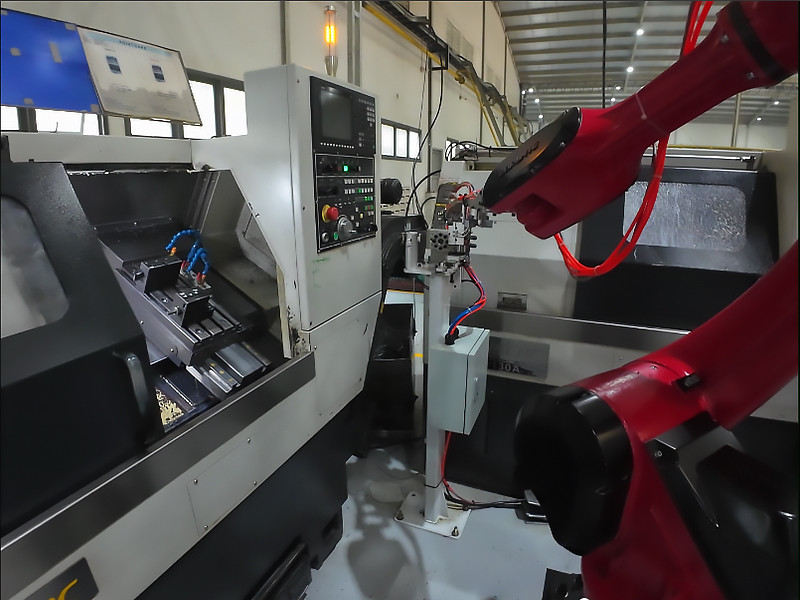
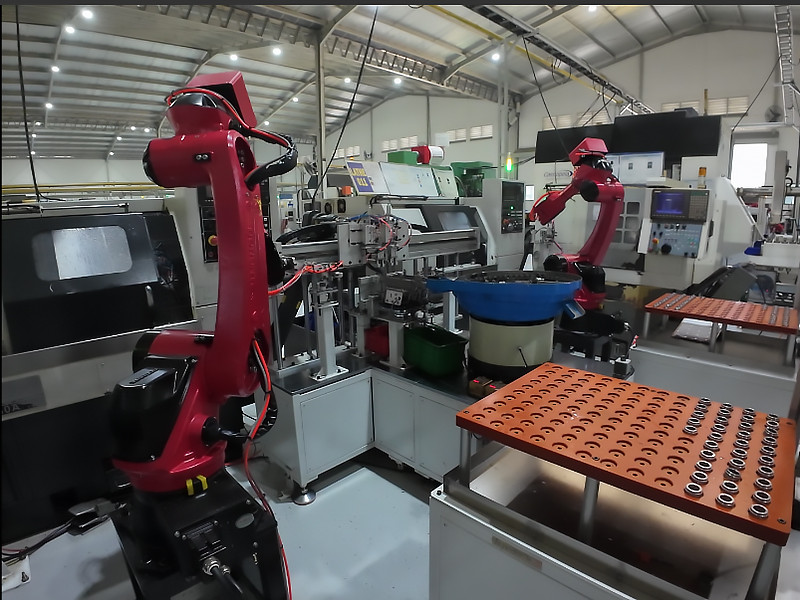
The RBTC team completed full-process commissioning in only 3 days. The robot achieved stable automatic operation of CNC loading and unloading.
Test data showed the results were good. Loading and unloading accuracy was over 99%. Production efficiency went up by 40%. The product defect rate dropped by 35%.
These results far exceeded the client's expectations.
The client spoke highly of the commissioning results, praising the RBTC team for its deep understanding of overseas working conditions and local needs, as well as its rapid response and strong technical expertise.
The client explicitly noted: "Your core strength lies not only in precisely resolving technical issues, but also in delivering customized services tailored to local production, along with ongoing operation and maintenance support. This is the capability we value most in overseas projects."
IV. Experience Summary: Empowering Global Clients with International Service Capabilities
The success of the Indonesian project verifies the differentiated advantages of RBTC's international on-site services and accumulates valuable experience for subsequent overseas projects:
Local adaptation is the core competitiveness of overseas projects:
The key to successful overseas projects is understanding local working conditions, equipment standards, and client needs. It is not just about technical details.
In the future, RBTC will strengthen its overseas survey teams. We will also improve the "Localized Working Condition Database." This will help us tailor our services better for clients in different regions.
End-to-end empowerment is the foundation of long-term cooperation:
RBTC uses a different approach than the traditional industry model. Instead of focusing only on commissioning, RBTC offers full-cycle service. This includes commissioning, local training, and follow-up support.
This method solves immediate issues and helps the client's local team gain skills for independent operation and maintenance. It builds trust by providing long-term value.
V. Future Outlook
Based on the success of the Indonesian project, RBTC will work harder to expand into international markets. It will also keep improving its technical research and service quality.
In the future, RBTC will focus on developing new technologies and equipment. This will help improve robot intelligence and adaptability in different situations.
At the same time, RBTC will enhance training for skilled workers. This will help build a professional team with a global view. The goal is to provide high-quality and efficient industrial automation solutions for clients around the world.